


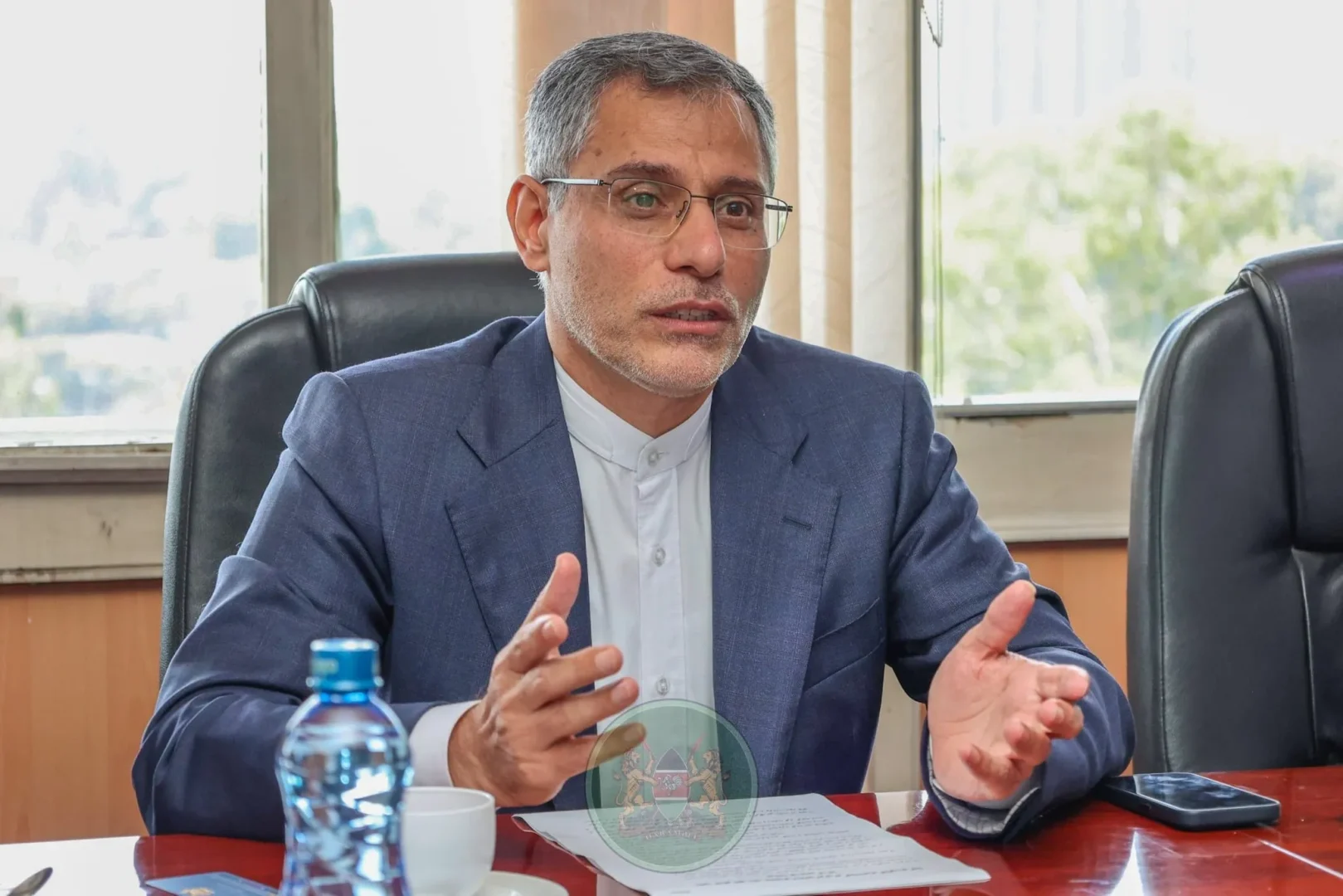
NAIROBI, Kenya — Iran’s Ambassador to Kenya, Ali Gholampour, has said Tehran will not target United States military facilities in Kenya, seeking to reassure Nairobi amid escalating tensions in the Middle East.
Speaking during a press briefing in Nairobi on Monday, Gholampour stressed that Iran’s missile programme is defensive and limited in range.
“Our missiles will not reach to get to the Kenyan territory. Our government wants to show its peaceful intentions in the war. These missiles are only for defensive purposes. They also have a range of 2000 kilometers.
“I don’t think we strike Kenya because we have good historical relations and we will do our best to save that relationship,” he stated.
The envoy added that he does not expect Kenya to permit its territory to be used for military action against Iran.
“I do not believe that Kenya will provide such a facility to attack Iran from its land,” Gholampour added.
The ambassador’s remarks come as tensions intensify following coordinated military strikes by the United States and Israel on Iranian targets, an operation that resulted in the death of Iran’s Supreme Leader Ali Khamenei and several senior military officials, according to official reports.
In retaliation, Iran launched missile and drone attacks targeting US-linked facilities and allied states across the Gulf region, including the United Arab Emirates, Qatar, Bahrain, and Kuwait.
The escalation has raised concerns about the broader regionalisation of the conflict and its potential global security implications.
Iran maintains that its missile strikes are aimed at military installations and strategic targets, describing the operations as proportionate retaliation.
Kenya’s position
President William Ruto has publicly condemned the widening conflict, warning that its expansion threatens international peace and stability.
In a statement issued Monday, Ruto criticised the strikes targeting Gulf nations.
“Kenya strongly condemns the strikes on the UAE, Qatar, Saudi Arabia, Iraq, Oman, Kuwait, Jordan, and Bahrain in the evolving conflict in the Middle East.
“It is evident that the regionalization of this conflict poses a grave threat to international peace and security,” Ruto stated.
Also Read: Ruto condemns Gulf missile strikes, warns of escalating global security threat
The President called for diplomatic intervention and multilateral engagement to prevent further escalation.
“At this defining and perilous moment in global history, longstanding multilateral institutions remain indispensable frameworks for the resolution of the current crisis in the Middle East. Kenya calls for urgent multi-stakeholder engagement towards de-escalation,” Ruto added.
Diplomatic and security implications
Kenya hosts close security and economic ties with both Western nations and Middle Eastern states.
While it does not publicly host permanent US combat bases, it has long-standing defence cooperation agreements with Washington, including joint counter-terrorism training and logistical partnerships.
Analysts note that the Iranian ambassador’s assurance appears aimed at preventing diplomatic friction and reassuring both Kenyan authorities and the public amid speculation about potential overseas targets linked to US interests.
The Middle East conflict has also disrupted global aviation routes and energy markets, with Gulf airspace restrictions affecting international carriers and raising concerns over maritime security in strategic waterways.
As tensions remain high, diplomatic efforts at the United Nations and among regional actors continue, though no immediate ceasefire has been announced.
