


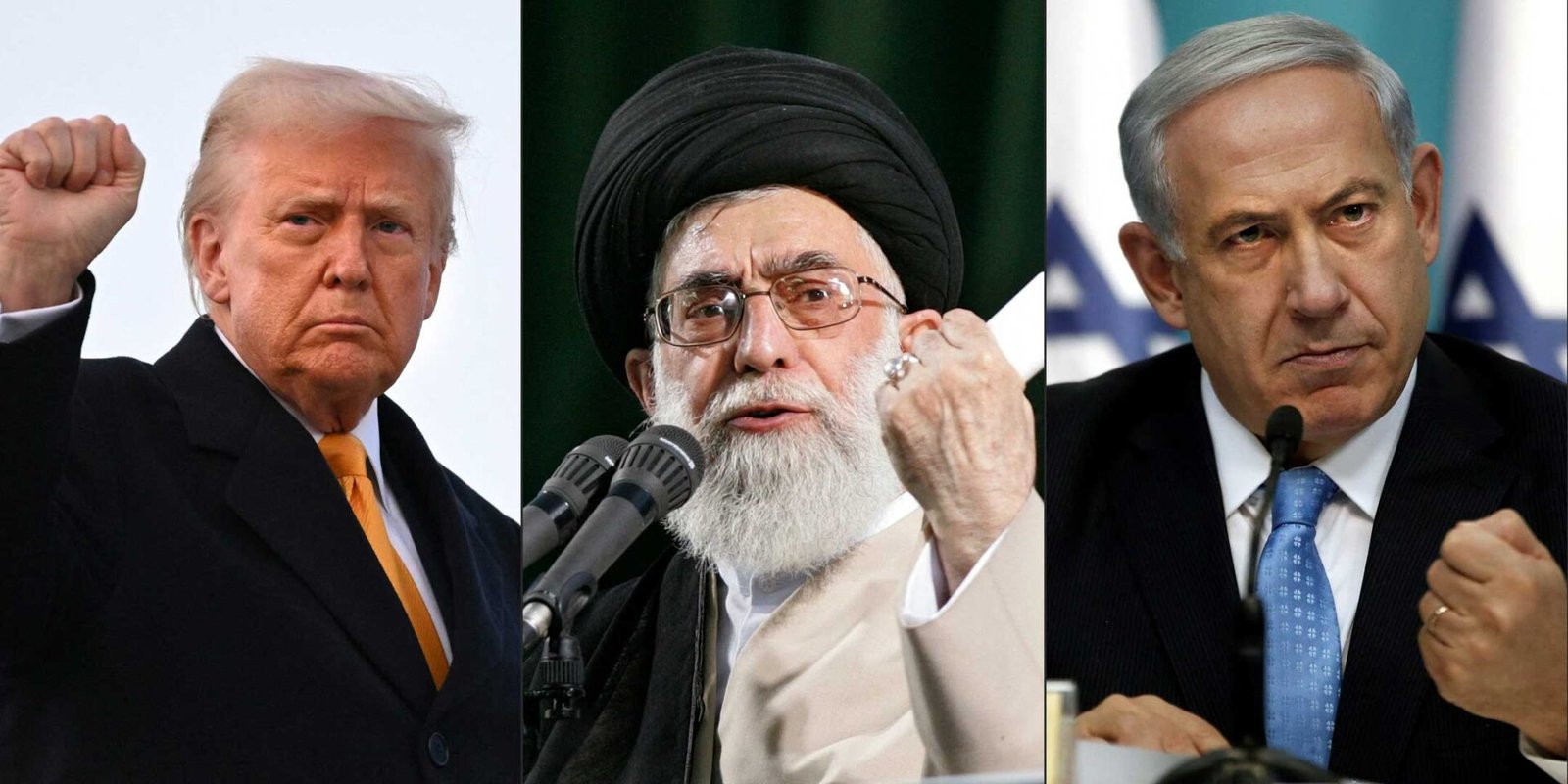
TEHRAN, Iran — The United States and Israel have launched what President Donald Trump described as “major combat operations” against Iran, dramatically escalating tensions across the Middle East and raising fears of a wider regional war.
The US military has dubbed its campaign “Epic Fury,” while Israel is referring to its operation as “Lion’s Roar.” The strikes came two days after US-Iran talks over Tehran’s nuclear programme ended without agreement.
In a social media post early Saturday, Trump said Iran’s Supreme Leader Ayatollah Ali Khamenei had been killed. Iranian state television later confirmed his death at the age of 86 and declared 40 days of national mourning. Khamenei had ruled since 1989.
Iran responded with missile and drone attacks targeting US and Israeli-linked interests across the region, describing the strikes as retaliation for what its foreign minister called an “unprovoked, illegal” assault.
Why did the US attack?
Shortly after explosions were reported in Tehran, Trump accused Iran of waging an “unending campaign of bloodshed and mass murder targeting the United States.”
He argued that Tehran had rejected repeated opportunities to abandon its nuclear ambitions and alleged that it was developing long-range missile capabilities capable of threatening Europe, US troops overseas, and potentially “soon reach the American homeland”.
Trump also cited longstanding grievances, including the 1979 seizure of the US embassy in Tehran, when 52 Americans were held hostage for 444 days, and the 1983 bombing of the US Marine barracks in Beirut that killed 241 American personnel.
The president referenced previous military action, including last year’s US air strikes on three Iranian nuclear facilities under Operation Midnight Hammer, which he said had “obliterated” Iran’s nuclear programme.
Those strikes followed a 12-day confrontation between Iran and Israel, during which Israel targeted Iranian nuclear and military sites and Tehran retaliated with hundreds of rockets and drones.
Is the US at war?
In his televised address, Trump described the coordinated strikes as “major combat operations”. However, the US Congress has not formally declared war.
Under Article I of the US Constitution, Congress retains the authority to declare war, although presidents have broad powers to order military action. The constitutional balance has long been debated in Washington.
Reactions on Capitol Hill have split largely along party lines. Republican Senator Lindsey Graham said the operation was “necessary and long justified”, while House Speaker Mike Johnson confirmed that congressional leaders known as the “Gang of Eight” had been briefed in advance.
Democratic lawmakers condemned the strikes. Senator Tim Kaine described the conflict as “Trump’s illegal war” and renewed calls for a war powers resolution to limit unilateral military action. Similar efforts failed last year.
Casualties and damage
Iran’s Red Crescent reported more than 200 deaths and over 700 injuries across 24 of the country’s 31 provinces. At least 108 people were killed in an explosion at a school in southern Iran, according to a local prosecutor.
An intelligence source cited by CBS News said roughly 40 senior Iranian officials were among those killed. Satellite imagery reviewed by BBC Verify showed significant structural damage to part of Khamenei’s office complex in Tehran.
In Israel, one person was killed and at least 20 injured when an Iranian missile struck buildings in central Tel Aviv, according to Israeli media reports.
Iran also launched missiles and drones toward Bahrain, Kuwait, Qatar and the United Arab Emirates — all of which host US military installations. UAE state media reported one fatality in Abu Dhabi.
The death toll is expected to rise as further strikes continue.
US military posture
The United States maintains approximately 30,000 to 40,000 troops across about 13 bases in the Middle East. There is currently no indication of US ground forces entering Iran, reflecting limited public appetite in America for a large-scale invasion.
However, US naval and air assets have been significantly reinforced. The aircraft carriers USS Gerald R. Ford and USS Abraham Lincoln are deployed in the region, alongside multiple fighter aircraft, surveillance platforms and refuelling tankers.
Military analysts note that, so far, US engagement has consisted primarily of aerial and missile strikes.
Iran’s capabilities and nuclear programme
Iran maintains that its nuclear programme is for peaceful purposes. However, international inspectors have confirmed that Tehran has enriched uranium to levels far exceeding civilian energy requirements.
Also Read: Uganda issues security advisory to nationals in UAE as Gulf tensions escalate
Neither the US nor Israel has publicly presented evidence that Iran was on the brink of producing a nuclear weapon. Nonetheless, both governments argue that pre-emptive action was necessary to prevent strategic escalation.
US cities have heightened security measures. New York City Mayor Zohran Mamdani said emergency officials were taking “proactive steps” in sensitive locations, while Los Angeles Mayor Karen Bass confirmed increased patrols despite “no known credible threats”.
Regional implications
The confrontation risks drawing in additional regional actors and disrupting global energy markets. Gulf airspace has experienced temporary closures and flight diversions.
Oil prices rose sharply in early trading amid fears of supply disruption through the Strait of Hormuz, a critical maritime chokepoint.
Diplomatic efforts are under way at the United Nations, where several member states have called for an immediate ceasefire and a return to negotiations.
Whether the crisis stabilises or escalates into a broader regional conflict will likely depend on the scale of further retaliatory strikes in the coming days.
