


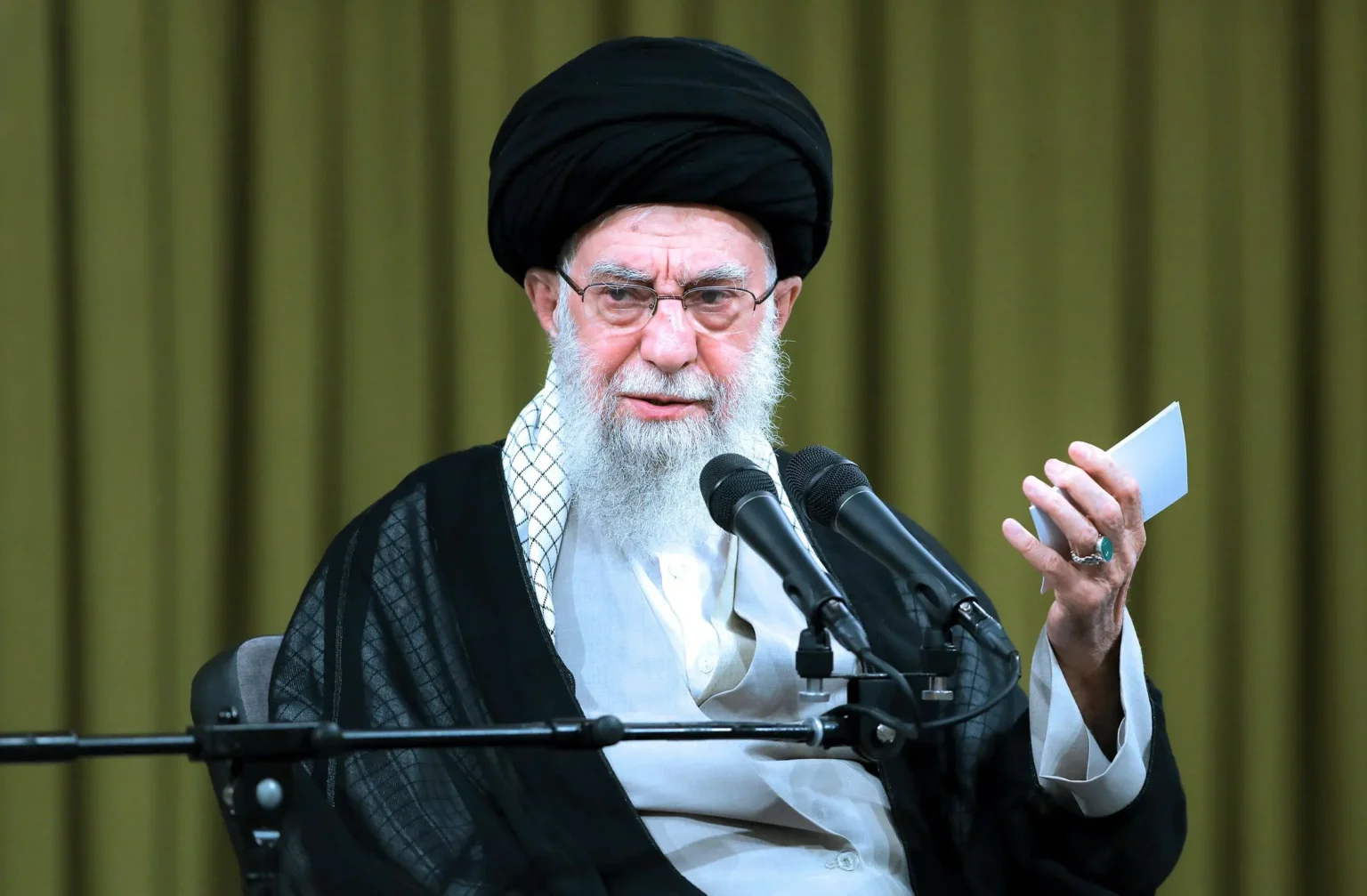
TEHRAN, Iran — Iranian state media and multiple international news outlets have confirmed that Ayatollah Ali Khamenei, Iran’s supreme leader for more than three decades, was killed in a coordinated United States and Israeli airstrike on Iran on 28 February 2026. The announcement has plunged the Middle East into a state of heightened tension, with Tehran declaring 40 days of national mourning and vowing severe retaliation.
The 86-year-old cleric, who had led the Islamic Republic since 1989, was widely seen as the central authority in Iran’s political system, commanding influence over the military, judiciary, and foreign policy.
His death, one of the most consequential developments in Middle Eastern geopolitics in decades, was also confirmed on social media by Donald Trump, who described the operation as a strategic blow to Iran’s leadership.
Iranian authorities have announced a period of national mourning lasting 40 days and a seven-day public holiday, and the Islamic Revolutionary Guard Corps (IRGC) has warned of “the heaviest retaliation” against both US and Israeli targets.
Unfolding conflict
The airstrikes, reportedly part of a broader military campaign targeting Iranian leadership and strategic infrastructure, have prompted immediate retaliatory missile and drone attacks by Iran on Israeli cities and US military bases across the Gulf region, including in Bahrain, Kuwait, Qatar, and the United Arab Emirates (UAE).
Civilian casualties have been reported in multiple countries as airspace closures disrupt commercial flights and elevate regional instability.
Israeli Prime Minister Benjamin Netanyahu earlier said there were “many signs” Khamenei was “no longer alive” and that a compound associated with him had been destroyed. Israeli officials have claimed that senior Iranian military and nuclear programme figures were also killed in the operation.
Global leaders, including United Nations Secretary-General António Guterres, have urged restraint amid fears the conflict could escalate further and disrupt global peace and security.
Who was Khamenei?
Born in Mashhad in 1939, Khamenei studied in the religious seminaries of Najaf and Qom before becoming an early follower of Ruhollah Khomeini and his doctrine of velayat-e faqih, guardianship of the Islamic jurist.
After the 1979 revolution, he helped establish the Islamic Revolutionary Guard Corps, an institution that became central to Iran’s military and political power.
He survived assassination attempts, chaired revolutionary bodies, served two terms as president, and was appointed supreme leader following Khomeini’s death in 1989.
Under his leadership, Iran pursued an assertive foreign policy, supporting allied militias and proxy groups across the Middle East and resisting Western diplomatic pressure over its nuclear programme.
Domestic and regional legacy
Domestically, Khamenei’s tenure was marked by periods of reform and stern repression. His endorsement of disputed election results in 2009 ignited mass protests, which were met with harsh crackdowns.
In recent years, nationwide demonstrations against economic hardship and political restrictions provoked further repression, with human rights groups reporting arbitrary detentions and lethal force used against protesters.
Also Read: US and Israel launch major strikes on Iran, Tehran hits back
Regionally, he steered Iran’s strategy through proxy alliances with groups such as Hezbollah, shaping conflicts in Syria, Lebanon, Yemen, and Gaza.
While negotiations like the 2015 nuclear deal temporarily eased tensions with the West, the programme’s collapse after US withdrawal and renewed sanctions intensified adversarial dynamics.
Succession and future implications
Iran’s constitution mandates that the Assembly of Experts select a successor to the supreme leader.
With Khamenei’s death, analysts say a leadership vacuum could trigger political competition among clerical and military elites, particularly the IRGC, and introduce uncertainty into Iran’s domestic governance and foreign policy.
The broader implications of his death, on oil markets, regional alliances, internal stability in Iran, and global diplomacy, are unfolding amid continued exchanges of military strikes and international calls for de-escalation.