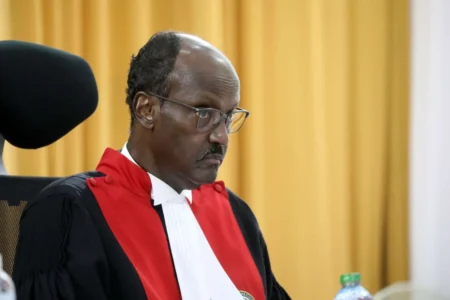



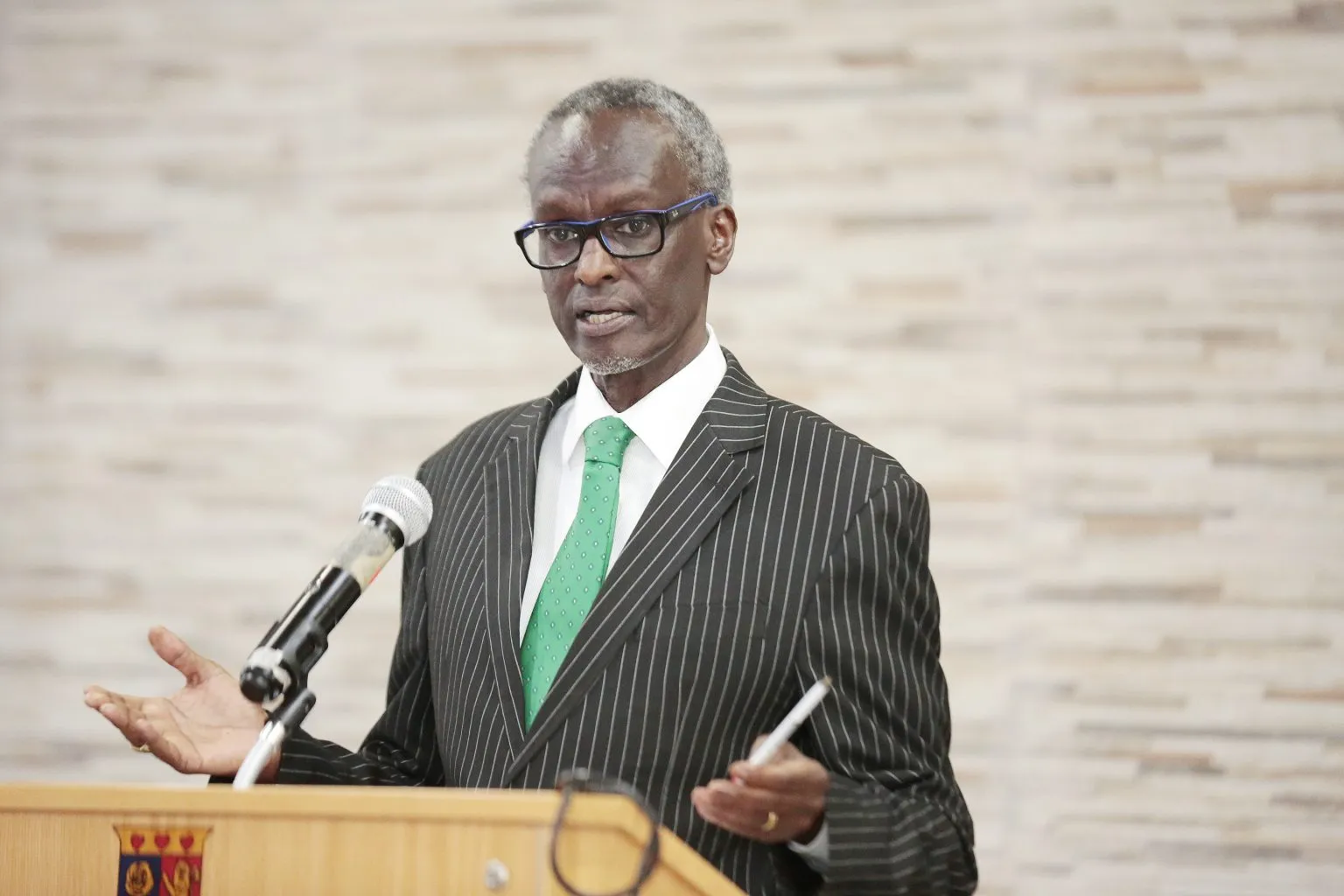
FREETOWN, Sierra Leone — Kenya’s Supreme Court judge, Isaac Lenaola, has been elected President of the Residual Special Court for Sierra Leone (RSCSL), the body that oversees the remaining legal obligations of Sierra Leone’s war crimes tribunal.
The decision was announced at the close of the Court’s two-day plenary session in The Hague on Friday, 27 February 2026.
Justice Lenaola, who has served as Vice President of the RSCSL, will hold office for a renewable two-year term. He succeeds the outgoing leadership team following internal elections that also saw Andrew Hatton elected Vice President and Tonia Barnett appointed Staff Appeals Judge.
Justice Lenaola has been a judge of the RSCSL since 2013. He was appointed to Kenya’s apex court in 2016 and previously presided over the Constitutional and Human Rights Division of the High Court in Milimani, Nairobi.
He has also served at the regional level as a judge and later Deputy Principal Judge of the East African Court of Justice between 2011 and 2018.
His elevation to lead the RSCSL places a Kenyan jurist at the helm of one of Africa’s remaining internationalised accountability mechanisms, a notable development for Kenya’s judiciary amid growing continental engagement in international justice processes.
Justice Hatton, first appointed to the RSCSL bench in 2013, previously practised law in the United Kingdom for more than two decades. He also served as an International Criminal Judge with the EU Rule of Law Mission in Kosovo (EULEX) before being appointed a Circuit Judge in the UK in 2012.
Justice Barnett, who joined the RSCSL in 2021, has held senior judicial positions in Sierra Leone, including service as a Magistrate, Senior Magistrate and later Judge of the Court of Appeal.
The RSCSL was established to carry forward the essential functions of the original Special Court for Sierra Leone, which concluded its mandate in December 2013 after prosecuting those bearing the greatest responsibility for atrocities committed during Sierra Leone’s 1991–2002 civil war.
The original tribunal secured landmark convictions, including that of former Liberian president Charles Taylor, the first former head of state convicted by an international court since Nuremberg.
Today, the Residual Court’s responsibilities include supervising enforcement of sentences, protecting witnesses, maintaining and preserving judicial archives, responding to requests from national jurisdictions, and conducting any necessary contempt or review proceedings.
During the latest plenary session, judges received briefings from the Registrar, the Prosecutor and the Principal Defender.
Also Read: Kenya mourns Supreme Court justice Mohamed Khadhar Ibrahim, dead at 69
Discussions focused on proposed amendments to the Court’s rules of procedure, a draft Stocktaking Report assessing institutional performance, funding considerations, and review of the RSCSL’s 12th Annual Report covering 2025.
International residual mechanisms such as the RSCSL face increasing financial scrutiny, as donor funding tightens and global attention shifts to newer conflict zones.
The Court continues to operate from The Hague while maintaining engagement with Sierra Leonean authorities and affected communities.
Justice Lenaola’s election comes at a time when international criminal justice institutions are under renewed debate globally, with questions about sustainability, state cooperation and enforcement of judgments.
“The Court remains committed to fulfilling its mandate responsibly and efficiently,” RSCSL officials said in a statement following the plenary. The Court encourages media inquiries through its official channels, emphasising that the information is for public reporting and not for advertising purposes.