



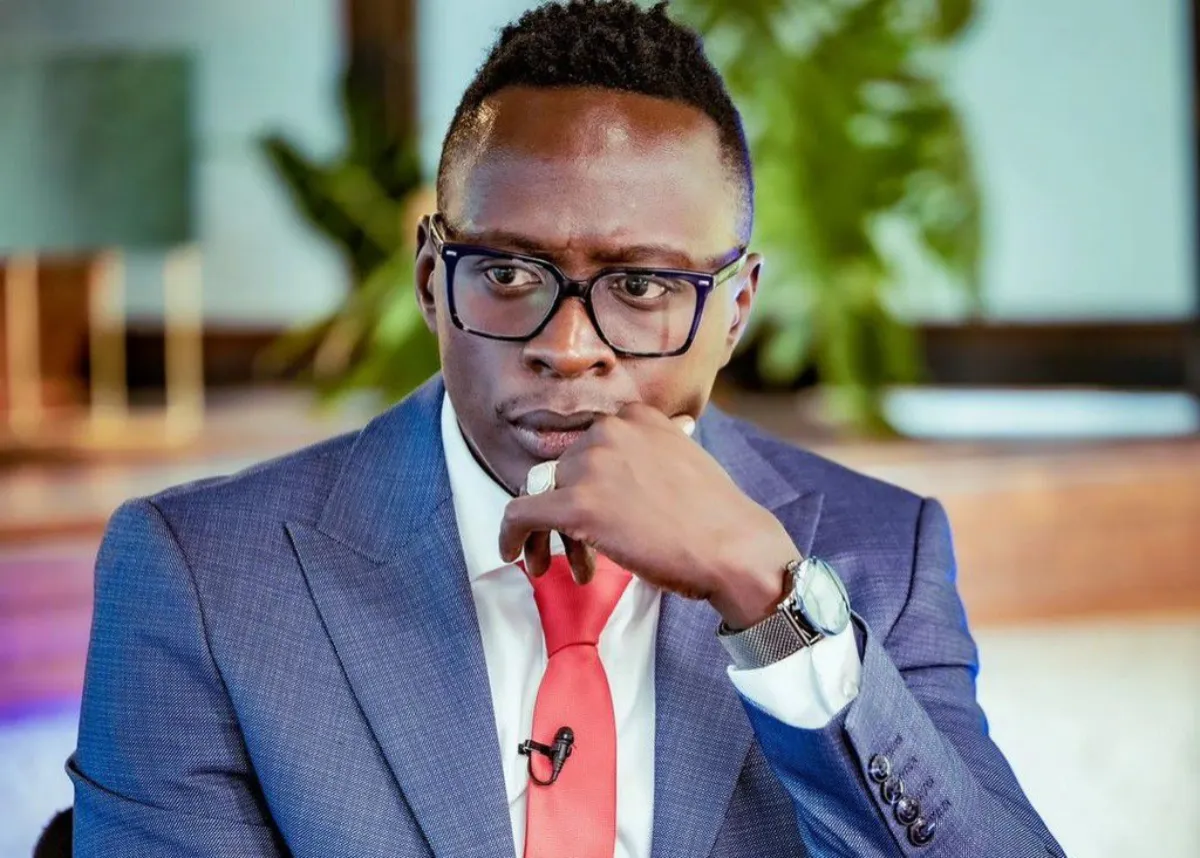
NAIROBI, Kenya — Kenyan media personality Steve Thompson Maghana, popularly known as Oga Obinna, has called on ODM leader Oburu Oginga to contribute KSh1 million for using the now‑viral catchphrase “weka mawe” in his public messaging, a demand that has captured both social media attention and broader debate about intellectual property and cultural ownership.
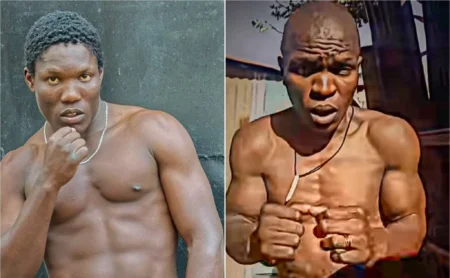
The phrase “weka mawe” (“put stones” in Swahili) first gained traction last month after being popularised by boxer Mbavu the Destroyer in an online challenge tied to his upcoming fight with rival Majembe, scheduled for April 4, 2026.
The slogan was delivered in a clip that went viral after Mbavu repeatedly encouraged a young supporter to place stones on his shoulders while he remained unfazed.
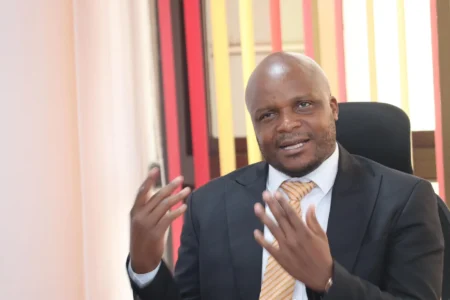
Oburu Oginga, Siaya Senator and leader of the Orange Democratic Movement (ODM), subsequently embraced the trend on social platforms, posting a humorous video of himself participating in the challenge, lightly tapping his back while repeating “weka mawe” to the amusement of social media users.
His adoption of the phrase was viewed as a lighthearted engagement with youth culture, adding political undertones ahead of upcoming campaigns.
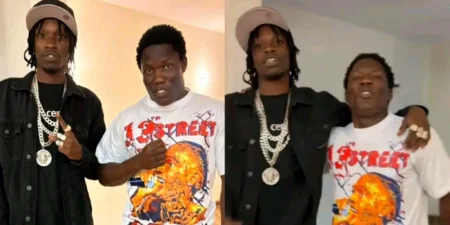
On Sunday, Oga Obinna reposted Oburu’s video with a playful but pointed challenge: if public figures like the ODM leader choose to use the informal catchphrase, they should help support the associated event, in this case, the boxing match, with a financial contribution.
“Very nice, now nikujie 1M wapi? Mkitumia slogan mnasupport the battle,” Obinna wrote on his official Instagram account, effectively demanding that anyone using the slogan also contribute to the sporting event’s coffers.
Obinna’s call comes amid heightened interest in the Mbavu the Destroyer vs Majembe fight, dubbed “Vurugu,” which has already attracted significant attention from politicians and celebrities.
President William Ruto himself has endorsed the event, honouring a pledge of KSh4 million towards the showdown through Lang’ata MP Phelix Odiwuor (Jalang’o) — with contributions earmarked for ticket subsidies and fighter purses.
Intellectual property and cultural ownership
The exchange raises broader questions about who owns a phrase once it enters popular culture, and whether such expressions can be “patented” or legally claimed by an individual.
In most jurisdictions, catchphrases and slang cannot be protected under copyright unless they are registered as trademarks for specific commercial use.
Trademarks offer legal ownership over phrases used in commerce, branding or merchandise, but require formal application and approval by a regulatory authority.
Absent such registration, viral slang belongs to the public domain and is free for widespread use.
Legal experts note that even if a phrase becomes widely associated with an individual, enforcing exclusive rights is challenging without prior registration and an associated commercial use case.
In the Kenyan context, the Kenya Industrial Property Institute (KIPI) administers trademark registrations, including slogans, logos and catchphrases used in trade.
Without a registered trademark, it would be difficult for someone, including Obinna, to claim financial compensation solely based on social adoption of a phrase by another public figure.
However, public personalities have in the past trademarked slogans and phrases to sell branded merchandise or to protect brand identity, a strategy that involves official filing and ongoing enforcement.
Politics, pop culture, and public discourse
The “weka mawe” phenomenon has transcended its origins to become a symbol of humour, resilience and political engagement.
President Ruto’s incorporation of the phrase into discussions about national development, likening “mawe” to programmes such as Affordable Housing, SHA, Kazi Mtaani, and Nyota, illustrates how political figures can repurpose viral motifs to connect with youth and popular discourse.
Also Read: Can Mbavu the Destroyer be ready in two months to beat Majembe? A realistic assessment
Meanwhile, Oburu’s participation has sparked widespread social media engagement, with netizens responding to his version of the challenge in a mix of amusement and commentary.
Some have celebrated the creative crossover of political leadership into viral culture, while others have mocked the idea of financial claims tied to social phrases.
As the boxing match approaches and digital culture continues to influence political narratives, the debate over “weka mawe” highlights a convergence of entertainment, politics and intellectual property in contemporary Kenyan society.
Whether Obga Obinna’s appeal for KSh1 million will lead to formal legal claims, trademark actions, or remain in the realm of online banter remains to be seen.
What is clear is that in the era of social media trends and political marketing, even casual catchphrases can spark wider conversations about ownership, identity and influence.