


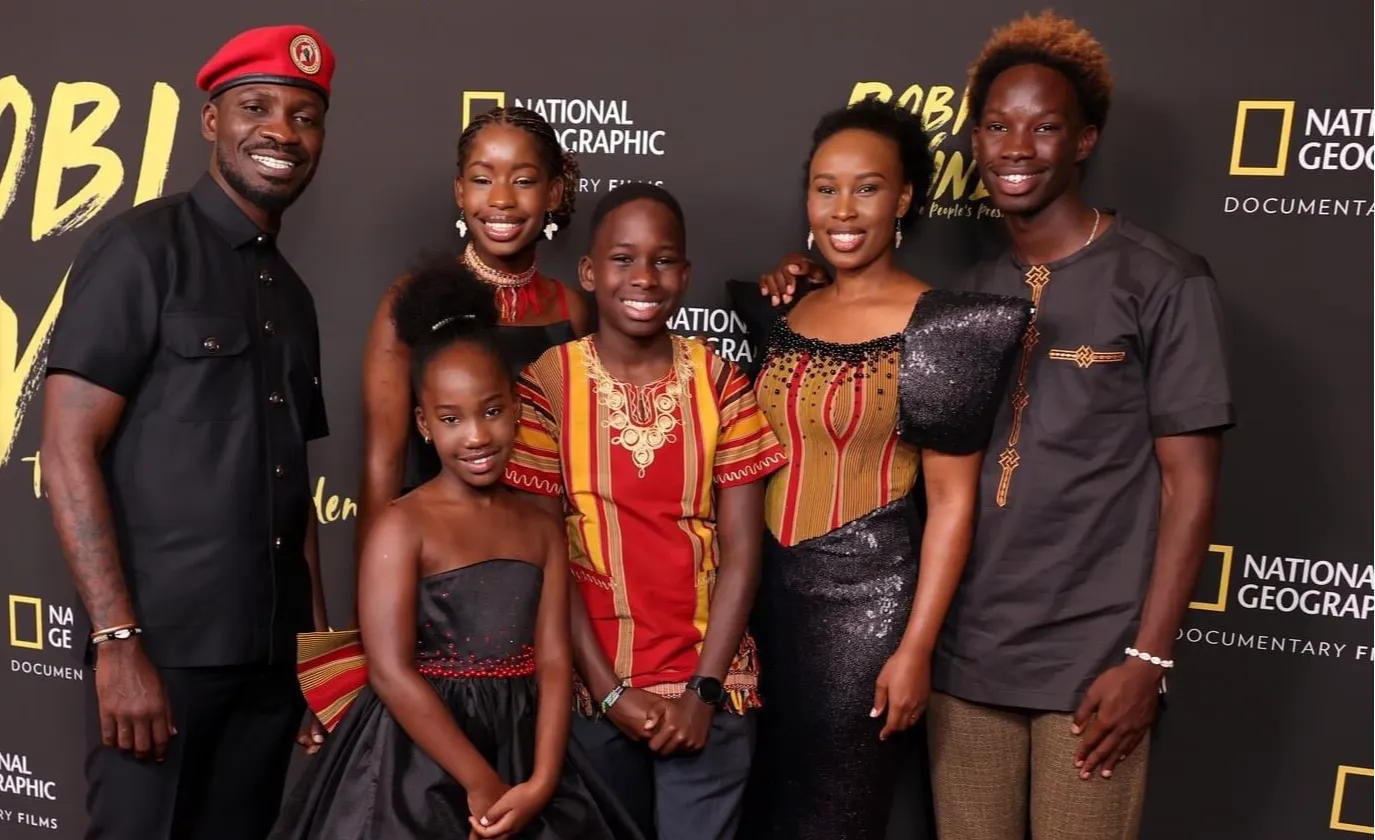
KAMPALA, Uganda — The leader of Uganda’s opposition National Unity Platform (NUP), Robert Kyagulanyi, popularly known as Bobi Wine, has said his wife and children left the country fearing for their safety following the January presidential election.
Kyagulanyi made the remarks while addressing delegates at the Geneva Human Rights Conference, where he spoke about the aftermath of the polls, his family’s security and what he described as sustained pressure from state authorities.
The opposition figure, who previously contested the presidency against Yoweri Museveni in the 2021 election, said security forces surrounded his home after voting concluded and maintained a prolonged presence.
“They took over my home and surrounded it, and they are occupying it as we speak right now,” he said.
Kyagulanyi said the situation forced his wife, Barbie Itungo Kyagulanyi, and their children to leave Uganda for safety, though he did not disclose their destination.
“My wife and children had to flee the country for fear of their lives,” Kyagulanyi told the conference.
He further accused Uganda’s Chief of Defence Forces, Muhoozi Kainerugaba, of ordering his arrest and allegedly issuing a directive to have him captured “dead or alive.”
“As soon as the election was finished, Museveni’s son, who is also the chief of the Ugandan military, issued an order to take me to him dead or alive,” he claimed.
Kyagulanyi also alleged that military personnel raided his home and mistreated members of his family.
“The military acted on that order, raided my home, tortured my family members, humiliated and undressed my wife while accusing her of hiding me,” he said.
His comments come weeks after the presidential election in which the Electoral Commission of Uganda declared Museveni the winner with 71.4 percent of the vote, while Kyagulanyi placed second with 24.7 percent.
The opposition leader has rejected the outcome, citing irregularities, voter intimidation and what he describes as widespread suppression of his supporters.
Also Read: Bobi Wine reportedly flees Uganda after claiming security threats
Since polling day, he has kept a low public profile within Uganda but has continued to communicate with supporters via social media, a strategy analysts say reflects both security concerns and a shift toward diaspora-focused advocacy.
Human rights organisations have repeatedly raised concerns about post-election restrictions on opposition activities in Uganda, including detentions, alleged intimidation and limits on public assembly.
Authorities have previously rejected accusations of abuse, saying security operations are conducted within the law.
Kyagulanyi’s latest remarks highlight continuing tensions between the government and opposition figures as Uganda approaches another politically sensitive electoral cycle.
