


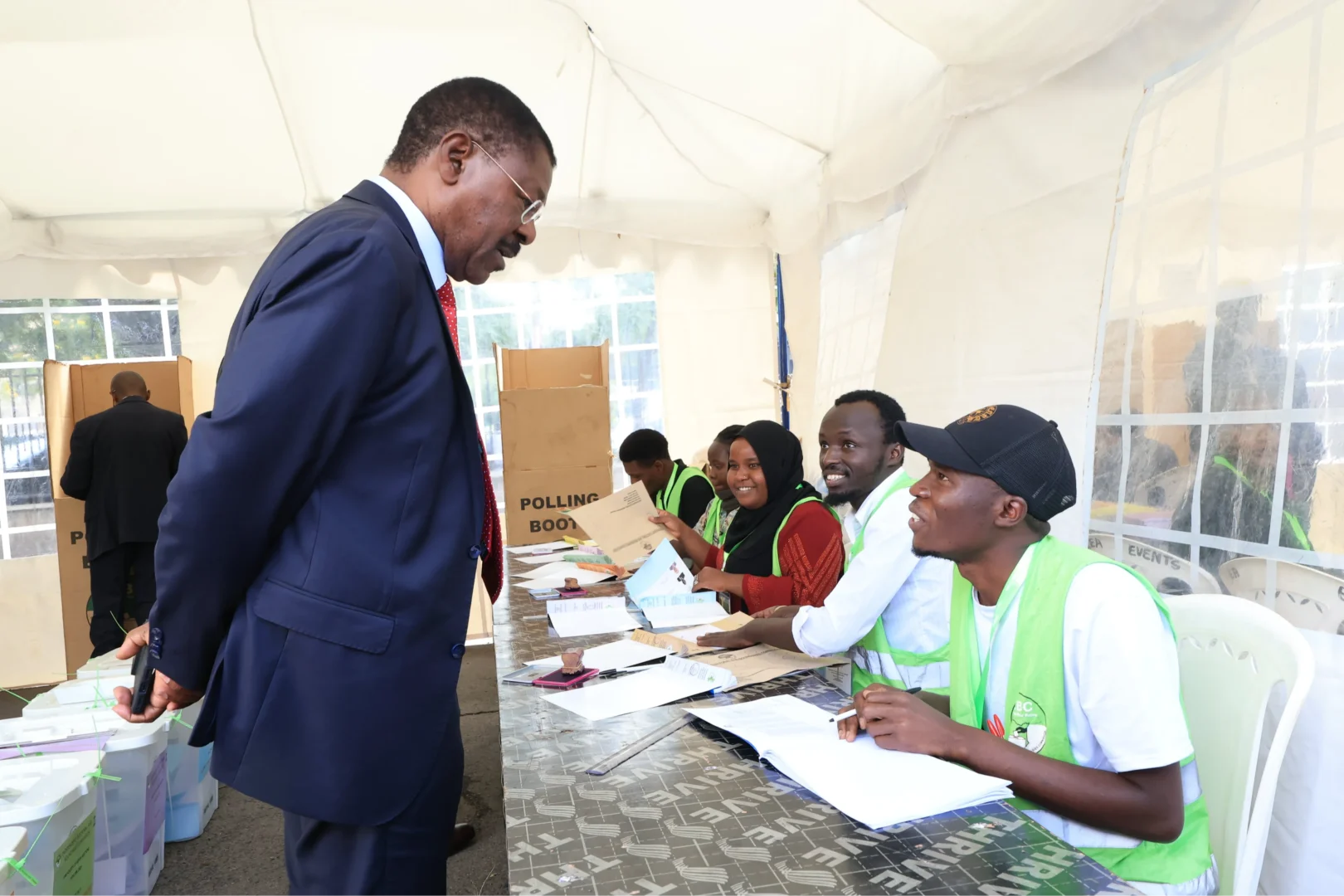
NAIROBI, Kenya — Moses Wetang’ula was on Thursday unable to cast his vote in the Law Society of Kenya (LSK) elections after discovering that his name was missing from the voter register.
Upon arriving at the polling station, the Speaker sought clarification from officials overseeing the process, questioning whether the omission was an administrative error.
LSK election board secretary Owiso Owiso explained that Wetangula’s status as a State officer placed him outside certain professional requirements governing the society’s electoral roll.
According to the official, Wetangula does not hold a valid practising certificate, a key requirement for participation in LSK elections.
Wetangula responded by noting that State officers typically do not obtain practising certificates unless they intend to resume active legal practice, a provision that effectively excludes them from voting under the current framework.
“As a Speaker of the National Assembly, I’m not in mainstream practice so it is moot to take out the practising certificate and you have told us we don’t need to, how come I’m not on the roll?” he posed.
Owiso maintained that the electoral board was implementing rules approved by the society’s members.
“Unfortunately, members including yourself, passed a regulation which insists you can only vote when you take out a PC (practicing certificate) which locks out State officers. But it is the members who passed the law, which we as the Board only enforce,” he stated.
High-stakes LSK contest
The elections have drawn attention across Kenya’s legal and political landscape, with several prominent figures participating, including Erastus Ethekon, Martha Karua, and Edwin Sifuna.
The race to succeed incumbent Faith Odhiambo is widely viewed as competitive, reflecting broader debates within the profession about regulatory reform, professional independence and the role of the LSK in national governance.
Also Read: Following MP’s murder, Speaker Wetangula mandates security overhaul for Kenyan MPs
Three candidates, Senior Counsel Charles Kanjama, current LSK Vice President Mwaura Kabata, and senior lawyer Peter Wanyama, are contesting the presidency.
Regulatory debate
The incident highlights an ongoing tension between public office and professional licensing within Kenya’s legal sector. Under LSK regulations, only advocates holding a current practising certificate can vote or hold certain positions within the society.
Legal analysts say the rule is designed to ensure that decision-making remains in the hands of actively practising lawyers, but critics argue it sidelines experienced advocates serving in public office.
The outcome of the elections could influence policy positions on legal reforms, judicial accountability and the profession’s engagement with government institutions.
