



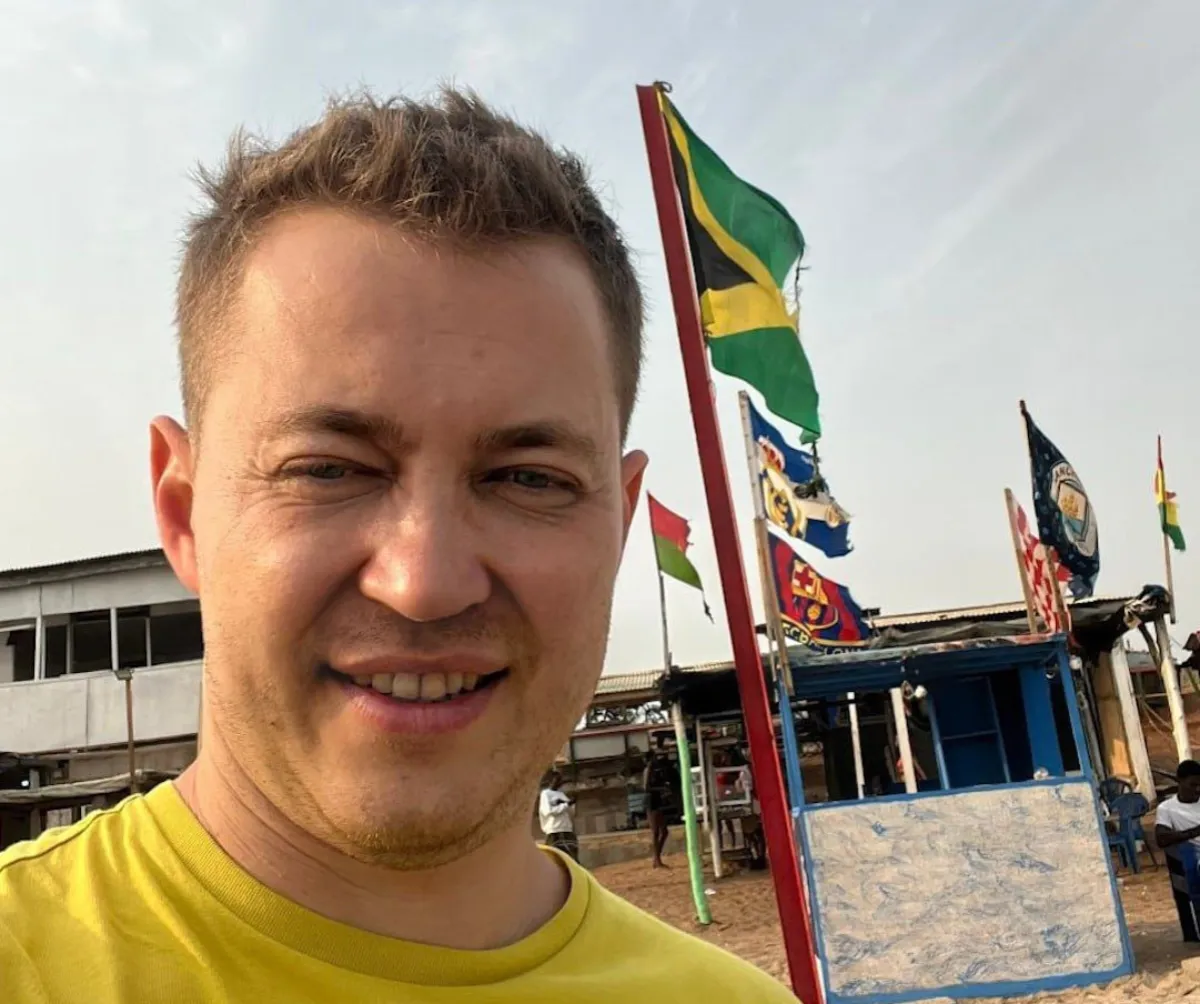
NAIROBI, Kenya — Authorities in Kenya and Ghana are probing the actions of a Russian national known online as Yaytseslav after videos allegedly documenting encounters with women in public and private settings went viral on social media.
The recordings were reportedly shared in a private Telegram channel and have sparked widespread concern over privacy violations, consent and online exploitation.
Kenyan and Ghanaian law enforcement agencies have publicly confirmed investigations into the matter, and have called for witnesses and victims to come forward.
Allegations of non-consensual filming
According to social media posts and local media reports, Yaytseslav approached women in malls and on the streets, asking for their names and phone numbers, then inviting them to his rented accommodation.
While some women declined the invitations, others accepted and later found themselves embarrassed when clips of the encounter circulated on Telegram and other platforms.
Identity and online persona
In the videos, the man identified himself as Yaytseslav Trahov. Online sources suggested that “Yaytseslav” roughly translates to “greater glory,” and that Trahov is a common Russian surname.
However, investigative posts on the Russian platform SHOT on Telegram allege the name was a pseudonym used by the subject.
SHOT reported that he lied to the women about his real identity, using the alias to avoid detection.
According to SHOT, his real name is Vladislav Lyulkov, a 36-year-old from Ulyanovsk, Ulyanovsk Oblast. The platform claims Lyulkov also used the names Yaytseslav and Vyacheslav Trahov.
SHOT further described him as a self-styled “professional seducer” with no known formal employment who sells online courses claiming to teach “pickup” techniques aimed at attracting women, even without financial resources.
“As SHOT has discovered, 36-year-old ‘professional seducer’ Vladislav Lyulkov, the real identity of the Ulyanovsk blogger, spent the last month on a sex trip in Ghana. Over the course of a month, Yaytseslav posted about 40 of his exploits. He has almost 37,000 followers on Telegram and 31,000 on YouTube,” SHOT noted.
Accounts from women featured in videos
In Kenya, Vivid Voice News reported that one woman featured in the videos, identified as Choice Kinoti, spoke publicly about her interaction with the Russian man.
Kinoti said she and the subject had dated and that she was aware he livestreamed their activities together.
She also addressed rumours about her health status, stating that she “was not sick.”
She said he recorded moments of them cooking and cleaning, and acknowledged that she had washed his clothes as a gesture of reciprocated affection.
Response from law enforcement and digital rights context
Kenyan authorities, including the Directorate of Criminal Investigations (DCI), have condemned the alleged behaviour.
The DCI stated that non-consensual filming and distribution of intimate content may constitute offences under Kenya’s Computer Misuse and Cybercrimes Act and other statutes protecting personal privacy and dignity.
Technology-facilitated gender-based violence, including the sharing of private or intimate material without consent, is an emerging concern for law enforcement across Africa as digital platforms become widely used for content dissemination.
In Ghana, the Ghana Police Service confirmed it is assessing evidence and coordinating with digital forensic teams to determine whether offences under the country’s Electronic Communications Act or other relevant laws have been committed.
International dimensions and legal challenges
The international nature of the alleged incidents highlights challenges in cross-border cybercrime enforcement.
Also Read: Mwaura condemns exploitation of Kenyan women by Russian national
Experts say prosecuting such cases generally requires cooperation between legal jurisdictions, digital evidence preservation and mutual legal assistance agreements.
Both Kenya and Ghana have existing frameworks for international cooperation on cybercrime and digital evidence, but execution can be complex and time-consuming.
Civil society groups focused on digital rights and women’s protection have called for clear legal protections, stronger platform governance by social media companies and public awareness campaigns on consent and online privacy.