


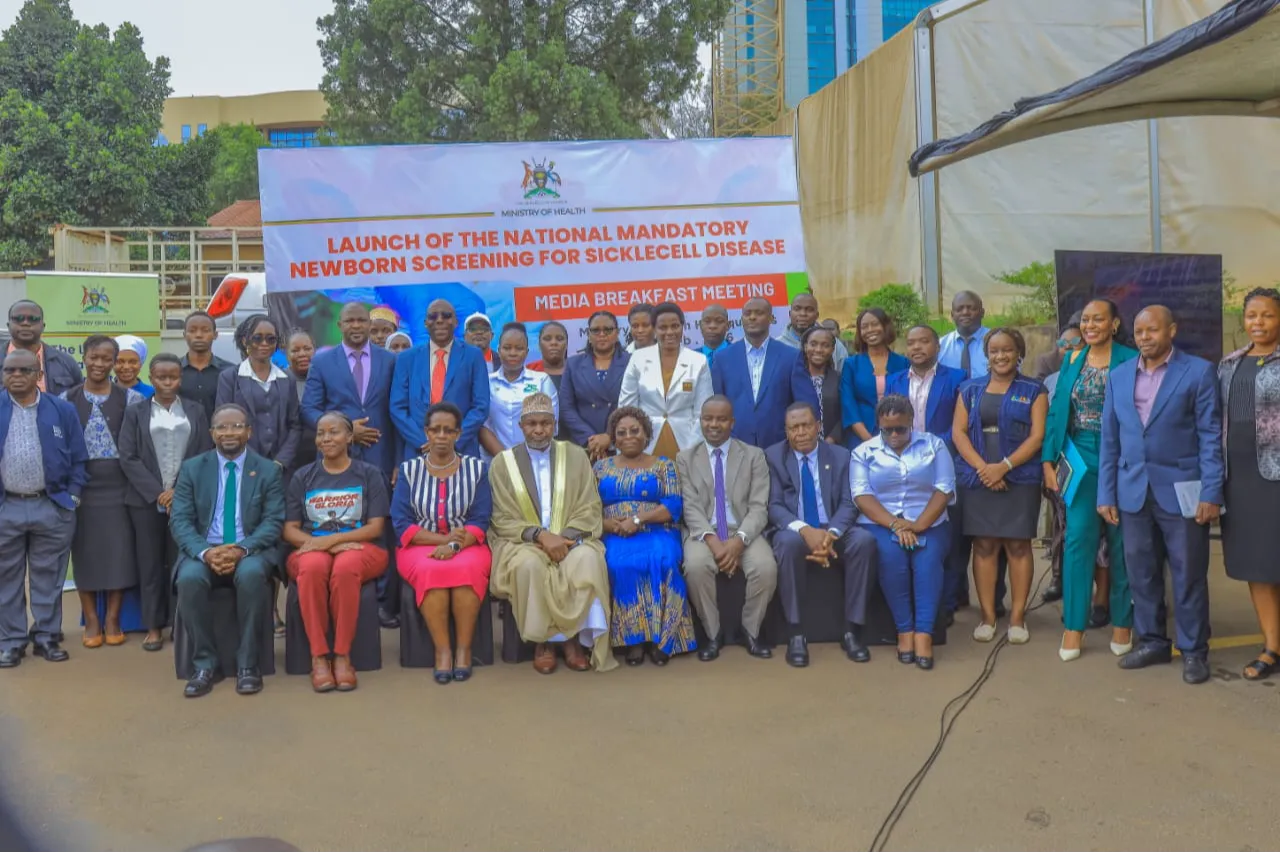
KAMPALA, Uganda — The Ministry of Health has officially launched the National Mandatory Newborn Screening Programme for Sickle Cell Disease, a landmark initiative aimed at improving early detection and care for children born with the condition.
The programme seeks to ensure that all newborns in Uganda are screened at birth, allowing for timely diagnosis, early treatment, and long-term management of sickle cell disease, a condition that continues to pose a major public health challenge in the country.
“Early detection is critical. It not only helps reduce child mortality but also improves the quality of life for children living with sickle cell disease,” health officials said during the launch.
Under the programme, screening will be fully integrated into routine newborn care across health facilities nationwide.
Families of affected children will receive follow-up support, counselling, and referrals to specialised care centres for ongoing treatment and management.
The Ministry of Health is urging parents and caregivers to participate fully in the programme, stressing that early screening is key to preventing severe complications and enhancing long-term health outcomes.
Also Read: HIV cases surge in Soroti as vulnerable schoolgirls sell sex for Shs 1,000
According to the World Health Organization (WHO), sickle cell disease affects millions globally, with sub-Saharan Africa carrying the highest burden.
In Uganda, approximately 20,000 children are born with sickle cell disease each year, with many cases going undiagnosed due to lack of routine newborn testing.
“This initiative is a major step forward in tackling sickle cell disease in Uganda,” said Dr. Jane Ruth Aceng, Uganda’s Health Minister. “By ensuring early diagnosis, we can provide timely interventions that save lives and reduce the burden on families and the healthcare system.”
The programme also includes community awareness campaigns to educate the public on sickle cell disease, its inheritance patterns, and the importance of early medical care.
