


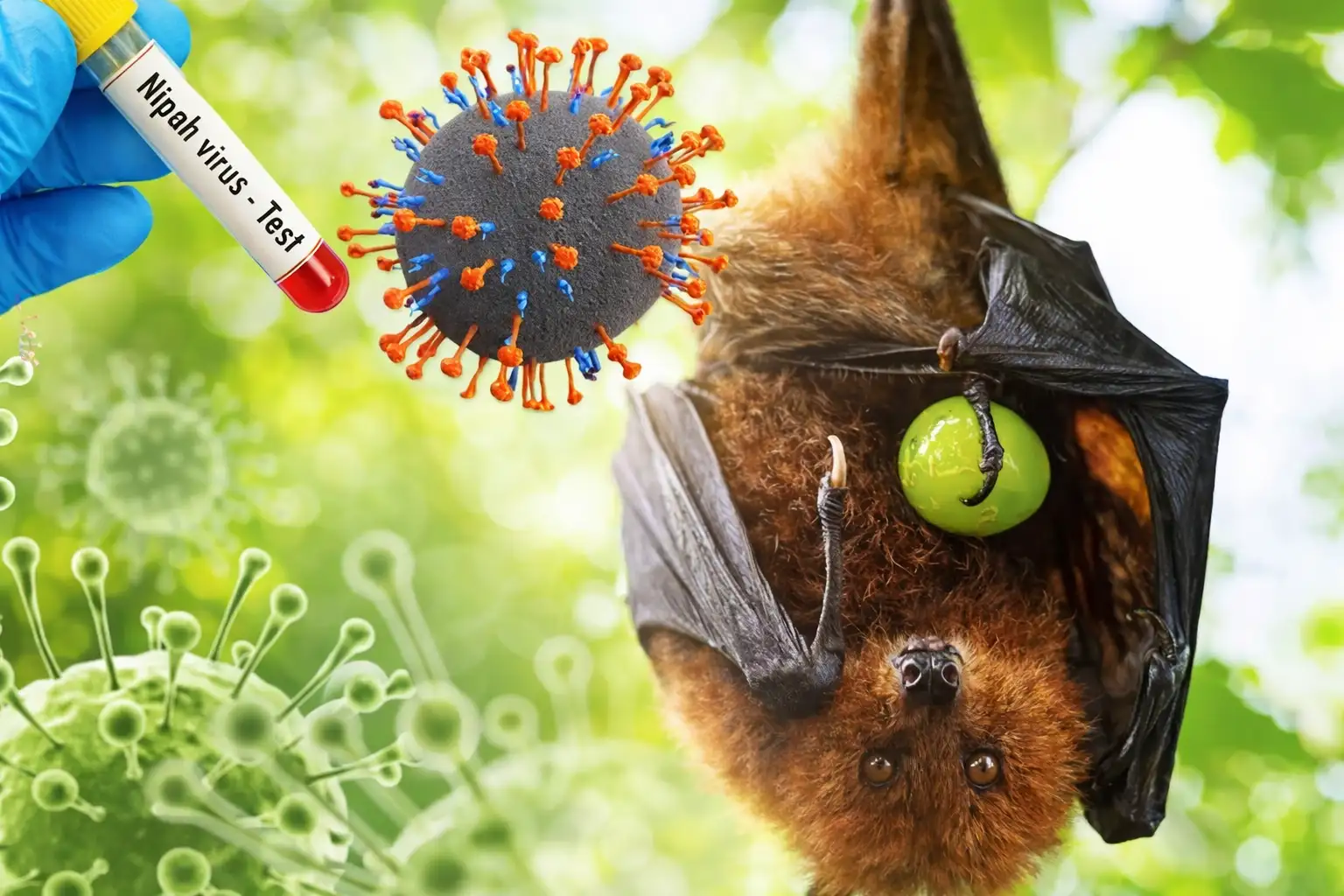
Health authorities worldwide are closely monitoring the Nipah virus, a deadly zoonotic pathogen with periodic outbreaks in South and Southeast Asia, amid renewed questions about whether it could spark the next global pandemic.
The World Health Organization (WHO) and national health agencies classify Nipah as a priority pathogen because of its high fatality rate, capacity for human-to-human transmission and lack of approved vaccines or specific treatments.
What is Nipah virus?
Nipah virus (NiV) is an animal-to-human virus first identified in 1998 during an outbreak among pig farmers in Malaysia and Singapore. It is carried by fruit bats (genus Pteropus) but can also infect other animals, including pigs and horses.
In humans, infection ranges from flu-like symptoms to severe respiratory illness and encephalitis (inflammation of the brain), with a case fatality rate estimated between 40% and 75% based on outbreaks in Asia.
Transmission to humans occurs through:
- Contact with infected bats, animals or their bodily fluids
- Consumption of contaminated foods such as raw date palm sap
- Direct human-to-human spread among close contacts, particularly in caregiving or healthcare settings
There is no licensed vaccine or specific curative therapy, and treatment remains limited to supportive care.
Recent outbreaks and surveillance
Nipah outbreaks are most frequent in Bangladesh and India and tend to follow predictable seasonal patterns linked to environmental and cultural practices.
In Bangladesh alone, surveillance data since 2001 shows hundreds of confirmed cases, with a significant proportion linked to consumption of raw date palm sap.
In early 2026, Bangladesh reported a fatal NiV infection in the Rajshahi Division, linked to date palm sap exposure, with health officials conducting contact tracing and community monitoring.
In neighboring India, authorities contained a recent outbreak in West Bengal, isolating cases and testing contacts, with no widespread community transmission detected.
Despite these serious incidents, the WHO currently assesses the global spread risk as low and has not recommended travel or trade restrictions.
Pandemic potential: Science vs Speculation
Concerns that Nipah could spark a global pandemic stem from several factors:
- High mortality: Fatality rates far exceed many respiratory viruses.
- Zoonotic nature: Spillovers from bats to humans are relatively common where bats and people co-exist.
- No vaccine: Absence of vaccines or antiviral drugs complicates outbreak control.
However, several crucial differences from past pandemic pathogens temper these fears.
Transmission dynamics:
Sustained human-to-human transmission, a key factor in pandemic spread, remains rare for Nipah.
Human outbreaks have largely been self-limiting and clustered within households or hospitals, often requiring prolonged close contact to spread.
Limited geographic distribution:
Fruit bats that maintain the virus are native to parts of Asia, Oceania and the Indian Ocean islands.
They are not found across large swathes of Europe, the Americas or Africa, reducing the immediate risk of global spillover.
Early containment:
Regional outbreaks in India and Bangladesh have historically been contained through contact tracing, isolation and infection control practices, preventing broader community spread.
Epidemiologists note that Nipah’s basic reproduction number (R0), the average number of people one infected person transmits to, has remained below levels seen in viruses that caused global pandemics like COVID-19, largely because the virus kills hosts before extensive spread can occur.
While this can evolve, current data suggests limited transmissibility.
Emerging research and preparedness
Global health research networks emphasise the need for enhanced surveillance, particularly in regions where people interact closely with bat habitats, and for new genomic tools to track potential mutations that could increase transmissibility.
Also Read: UK unveils ‘watch list’ of 24 high-threat infectious diseases for future pandemics
Efforts to develop Nipah vaccines are underway, including trials involving novel vector platforms, but significant scientific hurdles remain before these are licensed and widely deployable.
Surveillance and laboratory capacity in at-risk countries remain critical to early detection and outbreak response.
So, is Nipah the next pandemic?
At present, global health authorities do not consider Nipah an imminent pandemic threat. Human cases are sporadic, transmission is limited and existing outbreaks have remained regional, primarily in parts of Asia.
Nevertheless, Nipah’s potential cannot be dismissed, high lethality, environmental change, expanding human-wildlife interfaces and the absence of a vaccine make it a virus that merits serious attention.
Public health experts warn that proactive surveillance, strong infection control practices and accelerated research into vaccines and therapeutics are essential to prevent future wider spread.
In short, while Nipah virus poses a serious public health challenge with significant outbreak potential, the evidence so far does not point to a global pandemic on the scale of COVID-19.
Robust preparedness and real-time monitoring remain key to safeguarding against future risks.
