


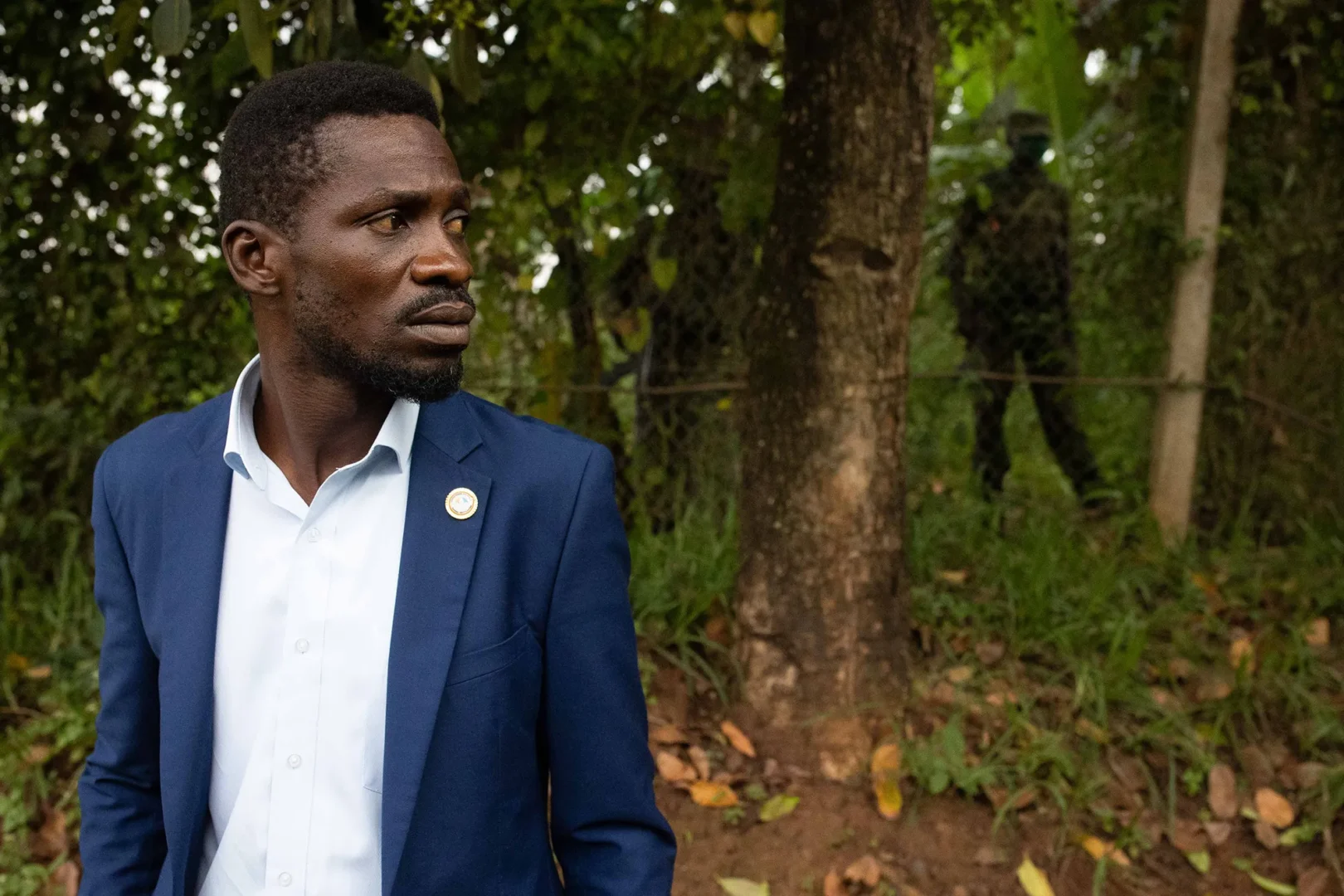
KAMPALA, Uganda — There are few things one can truly prepare for, and challenging a seasoned autocracy ranks among the most perilous. Regimes that have ruled for decades do not merely rely on force; they refine it, disguise it and, when necessary, outsource it to confusion.
Those who emerge as symbols of resistance often find themselves encircled not only by adversaries, but by comrades, informants and opportunists. It is impossible to fully decipher the intentions buried in the hearts and minds of supposed allies.
Iconhood attracts information in overwhelming volumes, much of it fabricated by hangers-on seeking relevance, some of it genuine but delivered with carefully concealed motives.
This is the context in which Robert Kyagulanyi, popularly known as Bobi Wine, found himself on the run. The central question is not whether the intelligence he received was false.
On the contrary, the warning appears to have been real: he was facing imminent arrest. The more difficult question is whose interests that intelligence ultimately served.
What emerges, when events since his departure are examined closely, is a disturbing possibility. The intelligence was authentic, but incomplete.
The danger was real, yet the outcome may have been designed. Bobi Wine was indeed at risk of arrest, but having him flee may have been the safer and more politically convenient option for the state.
Keeping the opposition leader on the run for months after a contested election neutralises him more effectively than immediate incarceration.
Arrest him too soon, and he becomes a rallying point. Let him disappear into flight, and uncertainty does the work. Arrest him later, or not at all, and the political moment loses its bite.
Government messaging has reinforced this ambiguity. Information Minister Chris Baryomunsi has insisted that Bobi Wine is not a wanted man. Yet the Commander of the Uganda People’s Defence Forces, Gen. Muhoozi Kainerugaba, has stated unequivocally that Bobi Wine is running from justice.
Both statements cannot simultaneously be true, yet both serve a purpose. The contradiction itself is politically productive. One arm of the state appears measured and reasonable, while another projects raw power. This division blunts collective public anger, redirecting it away from the system and towards individuals.
The night raids on Bobi Wine’s home, and the reported assault on his wife, point to more than rhetorical disagreement. They suggest an active pursuit. In this contest of narratives, it is difficult not to take the military commander seriously, not because of moral authority, but because he commands the coercive apparatus capable of enforcing a manhunt.
Would the State Actually Arrest Him?
Had Bobi Wine chosen to remain in place and await arrest, it is difficult to imagine a scenario in which he would not have been detained. The question of what crime he would be charged with is almost beside the point.
Uganda’s recent history offers its own answer. The incarceration of Col. Kizza Besigye, the detention of Obeid Lutale, Eddie Mutwe, Alex Waiswa Mufumbiro and others did not hinge on the legal robustness of charges. They are political prisoners not because of what appears in court documents, but because of what they represent.
The more sobering reality is this: the failure to sustain mass movements around political prisoners has emboldened the system. There has been no relentless, nationwide mobilisation around Dr Besigye’s detention or the prolonged incarceration of others, even after the Supreme Court ruled military trials of civilians unlawful.
The National Unity Platform (NUP) itself has struggled to transform arrests of its prominent figures into sustained political pressure. During the campaign period, supporters were detained in large numbers while the campaign marched on. That pattern offers little reassurance for the future of any arrested leader.
This leaves Bobi Wine isolated, facing a state that has grown confident in its ability to absorb outrage. Should he eventually be detained, history suggests there will be visits, statements and symbolic gestures, but little sustained disruption of political normalcy. Radical actions, such as coordinated boycotts of parliamentary or local government functions, are unlikely.
Why the state is safer with Bobi Wine on the run
From the regime’s perspective, the immediate post-election period was the most volatile. Every scenario involving Bobi Wine—house arrest, detention or unrestricted movement, carried risks. Each option risked galvanising supporters.
Allowing, or nudging, him into flight solves that problem. A leader on the run leaves his base disoriented and leaderless. Supporters struggle to understand whether to mobilise, wait or retreat. The state, meanwhile, claims restraint.
Also Read: Bobi Wine says military now fully occupies his home
If Bobi Wine were truly a high-priority criminal suspect, Uganda would look different. There would be roadblocks, sweeping searches and visible deployment. Instead, there have been selective raids, enough to instil fear, but not enough to clarify intent.
This suggests that the intelligence Bobi Wine received, while real, may have been part of a broader script. Running was not cowardice. Sitting still would have been reckless.
Yet flight achieves precisely what the system may have desired all along: a fractured opposition in the crucial aftermath of elections, its leader absent, its fronts confused, its momentum stalled.
In that sense, Bobi Wine may have escaped arrest, only to walk directly into the state’s most effective containment strategy.
