



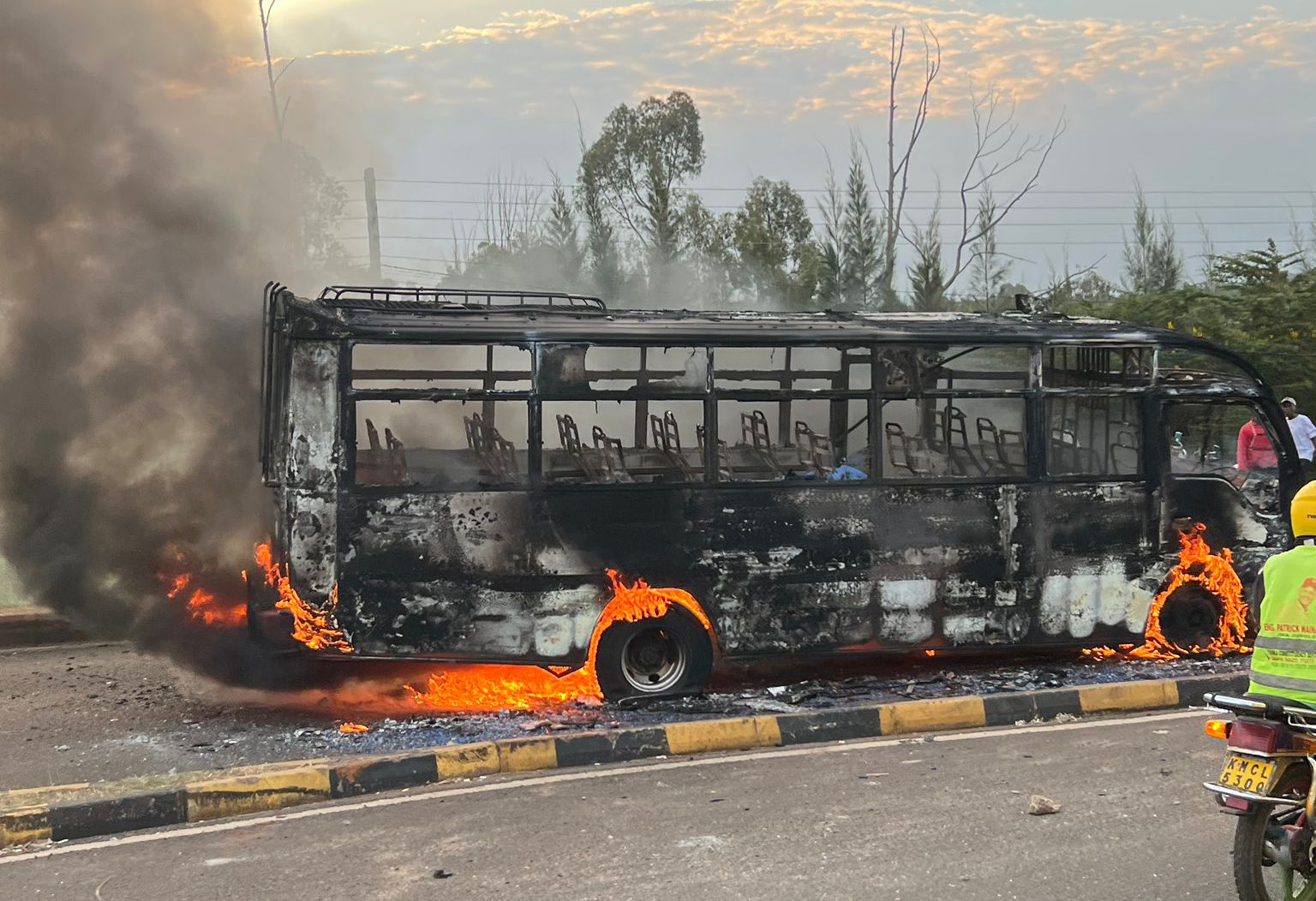
NAIROBI, Kenya — Commuters across Kenya are bracing for potential transport disruption after sections of the public transport sector announced plans to down tools over what they describe as unchecked violence and impunity on the roads, particularly the torching of vehicles following accidents.
The uncertainty follows conflicting positions taken by transport operators, with one umbrella group calling off a planned Monday strike while others insist industrial action will proceed.
On Sunday, the Federation of Public Transport Sector (FPTS) said it had suspended the strike scheduled for Monday, February 2, 2026, after consultations with security agencies, including Nairobi Regional Police Commander George Sedah. The federation said the decision was intended to create space for dialogue and de-escalation.
“Following consultations between representatives of Boda Boda Operators, PSV Operators, and Security agencies, it was agreed that the Matatu Strike scheduled for Monday, February 2, 2026, be suspended to give dialogue a chance,” the notice read.
“Public transport will operate as usual, and dialogue continues towards a lasting solution,” it added.
However, other influential transport groups quickly distanced themselves from the suspension, warning that a strike would still go ahead. Representatives of truck drivers, sections of public service vehicle (PSV) operators and Wasafi boda boda riders said they would participate in the protest, citing what they termed government inaction.
Speaking at a press briefing at Bombblast Memorial Park in Nairobi, Inter-Corridor Mobility chairman Joseph Kagai said operators had reached a breaking point.
“The property of investors must be respected. We will down our tools on Monday,” Kagai said.
Mass Mobility Secretary General Wilfred Bosire blamed the Interior Ministry and the National Police Service for failing to curb attacks on vehicles and ensure accountability.
“No one will call off the strike because we have an insensitive government; we want safe roads,” Bosire said.
Transport investors say the torching of vehicles after accidents has become increasingly common, with devastating economic consequences. Paul Thiongo of Forward Travellers said the destruction of a single vehicle often affects many dependants.
“When one car is torched, over 10 families are affected,” Thiongo said, adding that operators were prepared to stage weekly protests until authorities act.
Another industry representative, Karakacha, warned that sustained strikes could have a significant economic impact, estimating losses of up to Sh3 billion per day if public transport services are paralysed. He said the government should compensate investors whose vehicles have been destroyed.
Boda boda operators also voiced support for the action, while distancing themselves from criminality within the sector. John Makori of Wasafi boda boda said the group was implementing internal reforms to improve accountability.
Also Read: Matatu on Nairobi–Nakuru highway set on fire after killing boda boda rider
“We do not agree with criminal gangs amongst ourselves. They destroy our name,” Makori said.
He said the association had introduced identification measures, including QR codes linked to rider details and identification badges, aimed at improving traceability and discipline within the sector.
The standoff highlights growing tension between transport operators and authorities, as road safety concerns, mob violence and enforcement gaps continue to strain Kenya’s public transport system. For commuters, the mixed signals mean Monday, and possibly subsequent weeks, could bring disruption unless a consensus is reached.