


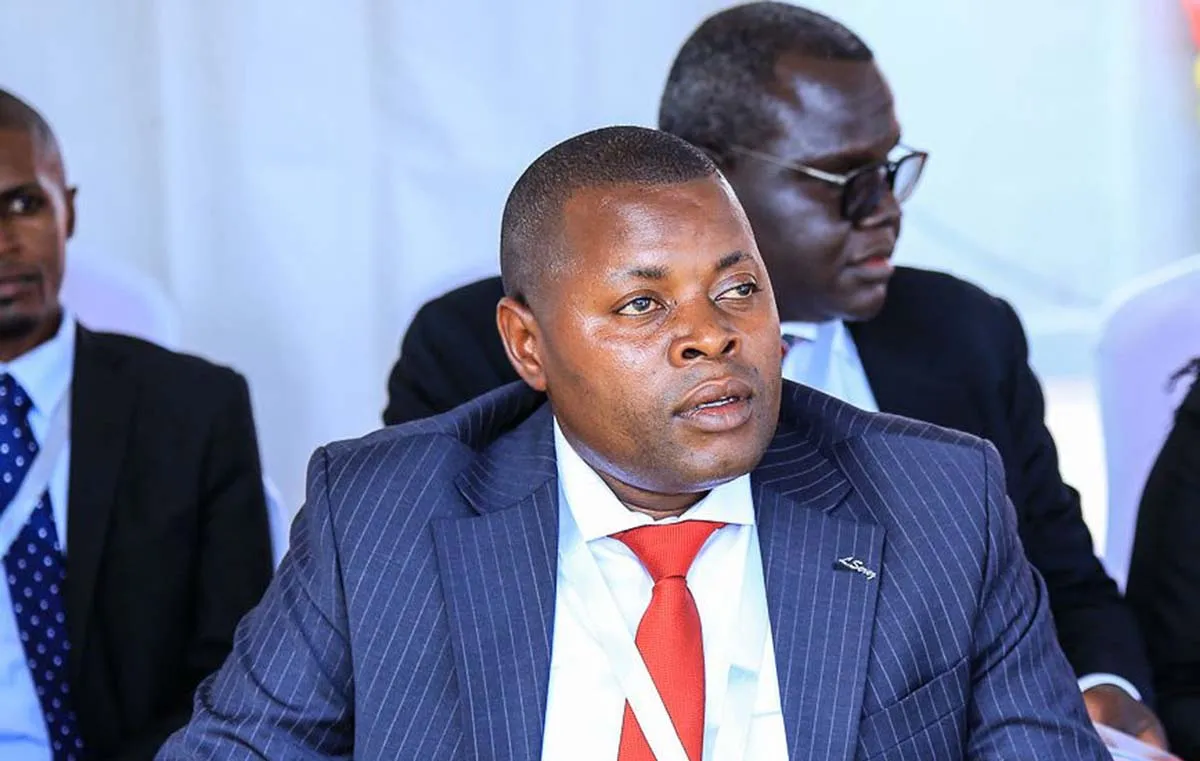
KAMPALA, Uganda — Presidential candidate Robert Kasibante has taken an unprecedented legal stand against President Yoweri Museveni’s declared victory in the 2026 presidential election, filing a petition with Uganda’s Supreme Court that promises to expose not only contested ballot figures but systemic failures and political dysfunction at the heart of the country’s electoral system.
Kasibante, representing the National Peasants Party (NPP), lodged his petition under Article 104 of the Constitution and Section 61 of the Presidential Elections Act, naming Museveni, the Electoral Commission (EC) and the Attorney General as respondents.
He contends that the election, held on January 15, 2026, was neither free nor fair, characterised by widespread irregularities, legal violations and institutional subservience to executive interests.
Challenging the official results
According to official figures, Museveni secured 7,946,772 votes, while Kasibante garnered just 33,440. Other candidates included opposition leader Robert Kyagulanyi Ssentamu (Bobi Wine) with 2,741,238 votes, Nathan Nandala Mafabi with 209,039, and Gen Gregory Mugisha Muntu with 59,276.
Kasibante’s petition does more than dispute numbers. It strikes at the legitimacy of the process itself, arguing that fundamental aspects of the election were conducted outside legal and constitutional requirements.
At its core, the case frames the 2026 election not merely as a flawed contest but as a crisis of electoral governance in Uganda.
Allegations of state influence and commission capture
In his supporting affidavit, Kasibante asserts that the Electoral Commission (EC) abdicated its constitutional obligation to organise an impartial election and instead acted under the influence of the first respondent and state actors, effectively compromising its independence.
This claim echoes broader criticisms from opposition figures and civil society that the EC has, over successive electoral cycles, displayed a pattern of alignment with executive interests, a dynamic that undermines trust in electoral outcomes.
Observers have noted delayed openings, malfunctioning Biometric Voter Verification (BVV) systems and a pre‑election internet blackout that obscured real‑time reporting and independent monitoring.
Violence, intimidation and security force actions
The petition further alleges that the Uganda People’s Defence Forces (UPDF) and Uganda Police Force (UPF) engaged in deliberate intimidation and violence against opposition candidates and supporters.
Kasibante cites repeated disruptions to his campaign, including teargas deployments and physical assaults on his supporters, a pattern he claims was mirrored in opposition strongholds like Gulu, Arua, Iganga and Namisindwa.
He specifically asserts:
“The violence inflicted upon the candidates by the armed forces was carried out under the direction of the First Respondent, who, as the supreme commander of the Uganda People’s Defence Forces (UPDF), bears ultimate responsibility.”
Kasibante also argues that Museveni’s campaign enjoyed disproportionate access to government resources, security personnel and state media, further skewing the playing field in favour of the incumbent.
This alleged pattern of state advantage aligns with broader opposition narratives, including those from the National Unity Platform (NUP), which also reject the official results on grounds of ballot stuffing, agent detentions and procedural irregularities across multiple districts.
Legal hurdles and Electoral Commission directives
The petition challenges several specific decisions of the Electoral Commission (EC). One concerns a directive requiring voters to leave polling stations immediately after voting, Kasibante argues this undermined transparency and violated legal provisions that allow observers within a 20‑metre radius.
Another focal point is the failure to gazette approximately 15,256 polling stations ahead of the election, nearly 30% of all polling stations nationwide, according to Kasibante’s figures. He contends that votes from these ungazetted stations were unlawful and should be excluded from the national tally as candidates and agents were denied proper oversight.
Legal observers suggest that these claims intersect with long‑standing flaws identified in Uganda’s electoral framework, such as the complex relationship between statutory law and technological tools like BVV systems, which Kasibante argues were deployed without adequate legal foundations or transparency.
In his affidavit, he states:
“The operating system and software architecture of the BVV machines were unknown and undisclosed, raising serious concerns about integrity, security, and susceptibility to tampering.”
A broader context of institutional fragility
The Kasibante petition arrives amid heightened scepticism about electoral management in Uganda.
The Uganda Human Rights Commission (UHRC) has documented significant logistical and technical failures, including delays in polling station openings and widespread malfunctioning of BVV devices, although it stopped short of calling the process unlawful.
Meanwhile, other parties like the Democratic Front have independently rejected the election outcome, citing long lists of irregularities from late deliveries of materials to polling stations housed within security installations, which, they argue, compromised voter access and transparency.
Legal analysts caution that, under current jurisprudence, the Supreme Court exercises considerable discretion in assessing the impact of alleged irregularities, meaning even substantial evidence may not guarantee a successful nullification unless judges are persuaded of a material effect on the result.
Judicial innovation ahead of the petition
This petition comes at a moment of procedural reform in the judiciary. For the first time, presidential election petitions will be filed electronically through the Judiciary’s Electronic Court Case Management Information System (ECCMIS), reflecting efforts to modernise and streamline high‑profile litigation.
Whether these procedural changes translate into deeper judicial willingness to engage with profound electoral grievances remains a central question.
Remedies and stakes
Kasibante seeks expansive remedies: a declaration that Museveni was not duly elected, nullification of the 2026 results, an audit of election returns and BVV systems, and a directive for a fresh election in full compliance with the law.
The respondents, including the Electoral Commission (EC) and Attorney General (AG), must file responses within ten days of service, a deadline that could set the stage for a protracted and closely watched legal battle.
What this petition represents
More than a legal challenge by a minor candidate, Kasibante’s petition crystallises a broader crisis of electoral legitimacy in Uganda. It intersects with opposition claims, human rights concerns, and the lived experiences of voters navigating institutional opacity.
As the Supreme Court begins to digest the petition, the nation, and observers across Africa, will watch not only for the legal arguments, but for what the outcome reveals about the capacity of Ugandan institutions to uphold democratic standards under pressure from executive power.
