


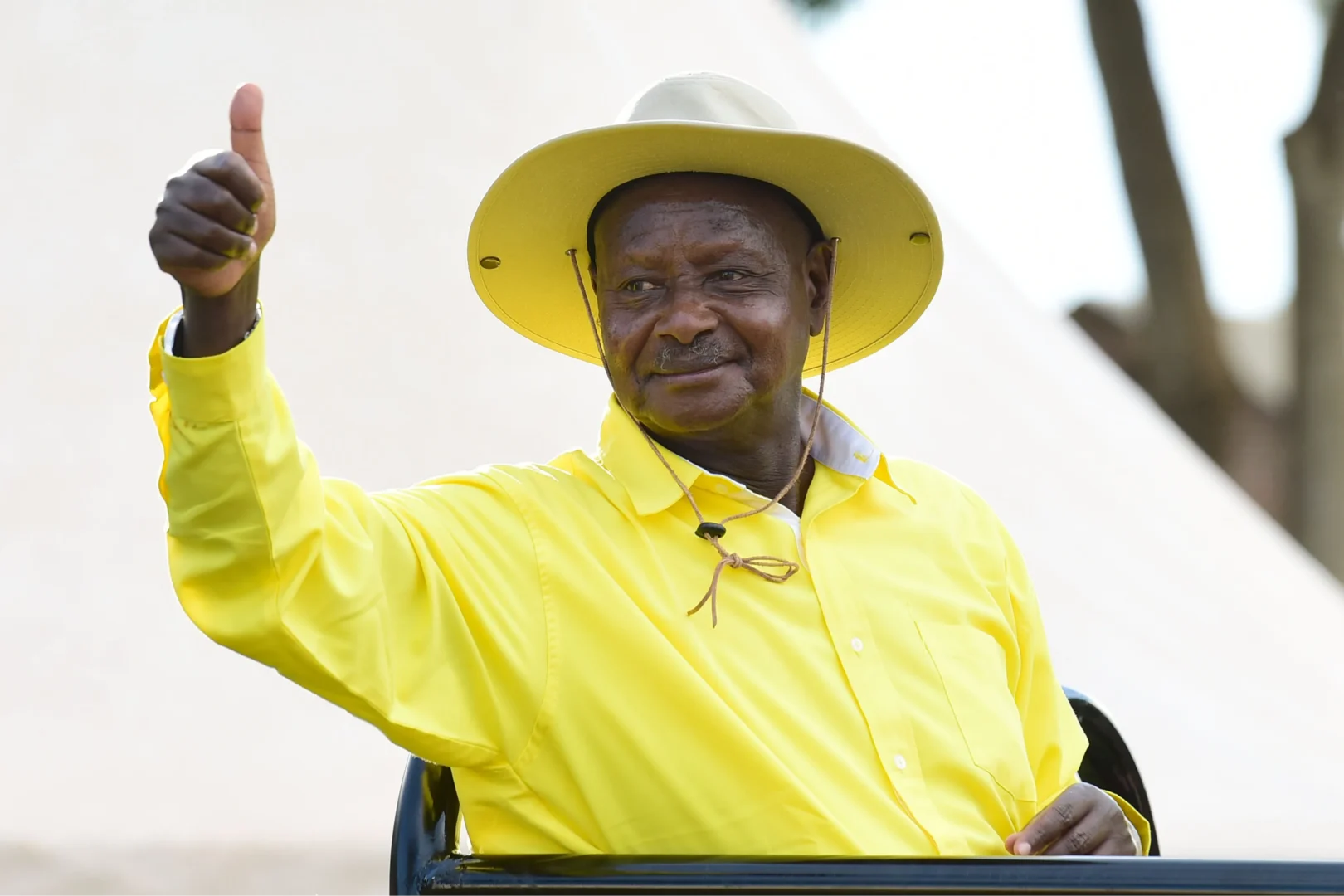
KAMPALA, Uganda — Uganda’s long-time President Yoweri Museveni has been re-elected, electoral officials say, amid accusations of vote fraud by his main rival Bobi Wine.
Mr Museveni won with 71.65% of the vote, with Bobi Wine trailing with 24.72%, the Electoral Commission (EC) announced.
Announced at the National Tally Centre in Lubowa, Lweza, EC chairperson Justice Simon Byabakama confirmed that Museveni, who first came to power in 1986, garnered 7,946,772 votes, comfortably exceeding the number required for an outright win under Uganda’s constitution.
Museveni’s closest challenger, opposition leader Robert Kyagulanyi Ssentamu, popularly known as Bobi Wine, of the National Unity Platform (NUP), received 2,741,238 votes. Six other presidential candidates trailed with single-digit percentages of the vote.
The final count reaffirms a commanding national victory for Museveni, surpassing 70 per cent of the votes cast, an outcome that has been foreshadowed in successive provisional tallies released since polling concluded earlier this week.
Official context and reactions
In his declaration, Byabakama noted that the final results followed legal procedures under Uganda’s Presidential Elections Act, affirming that the Electoral Commission (EC) had fulfilled its constitutional mandate by publishing the outcome within 48 hours of polling.
The ruling National Resistance Movement (NRM) has interpreted the victory as a mandate from the electorate. Rogers Mulindwa, senior information official for the party, said the results demonstrate widespread voter satisfaction with Museveni’s leadership and development agenda.
However, the announcement has not been without controversy. Bobi Wine’s camp has denounced the outcome as illegitimate, alleging widespread irregularities and a lack of transparency in the counting process.
These claims echo earlier criticisms made during the campaign and ballot count, when Wine accused authorities of disparate conduct and “massive ballot stuffing.”
Post-election environment
The 2026 election was marked by significant tensions, including reports of violence and unrest in several districts after polls closed. Human rights groups reported clashes between security forces and opposition supporters, with conflicting accounts of fatalities in areas such as Butambala.
In addition, the electoral period saw a nationwide internet shutdown imposed by the government, a move that drew international scrutiny and criticism from civil society and diplomatic missions. Observers argue that the blackout hampered independent reporting and contributed to concerns about the transparency of the process.
Police and military officials have countered such claims, asserting that the heightened security presence and restrictions were necessary to maintain public order during a highly charged political period.
Regional and international reaction
International response to the election has been mixed. Some regional partners have urged calm and respect for due process, while rights organisations have called for thorough investigation into allegations of irregularities and the reported post-election violence.
The electoral outcome reinforces Museveni’s position as one of Africa’s longest-serving leaders, with more than four decades in power.
Also Read: U.S. Embassy in Uganda warns citizens as post-election unrest escalates
Supporters credit him with maintaining stability and driving infrastructure and economic development, while critics argue his extended tenure has eroded democratic norms and suppressed meaningful opposition.
With the result now confirmed, Uganda enters a period of political consolidation. Museveni’s new term will begin against a backdrop of intensifying debate over governance, civil liberties and the future of democratic competition in the country.
Observers say the key challenge for the incoming administration will be to bridge deep political divides and address concerns about inclusive governance, especially among Uganda’s youthful population, which has shown vigorous support for political change in recent years.
Here is a clear table summarizing the final vote count for each presidential candidate in Uganda’s 2026 election as released by the Electoral Commission (EC):
| Candidate | Party | Votes Received |
|---|
| Yoweri Museveni | National Resistance Movement (NRM) | 7,946,772 – (71.65%) |
| Robert Kyagulanyi Ssentamu (Bobi Wine) | National Unity Platform (NUP) | 2,741,238 – (24.72%) |
| James Nathan Nandala Mafabi | Forum for Democratic Change (FDC) | 209,039 – (1.88%) |
| Gregory Mugisha Muntu | Alliance for National Transformation (ANT) | 59,276 – (0.53%) |
| Frank Bulira Kabinga | Revolutionary People’s Party (RPP) | 45,959 – (0.41%) |
| Robert Kasibante | National Peasants Party (NPP) | 33,440 – (0.30%) |
| Mubarak Munyagwa | Common Man’s Party (CMP) | 31,666 – (0.29%) |
| Joseph Mabirizi | Conservative Party (CP) | 23,458 – (0.21%) |
