


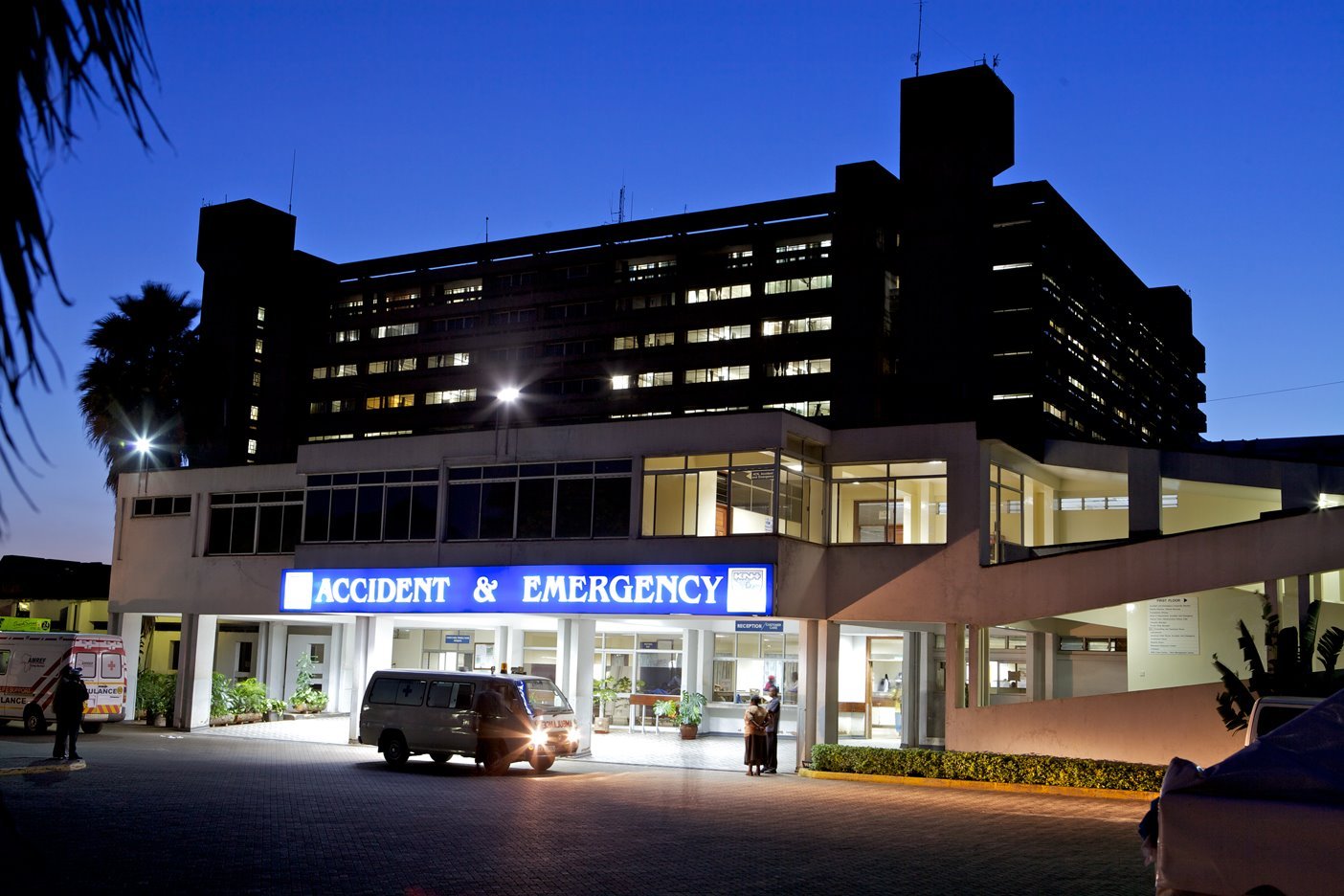
NAIROBI, Kenya — A man has died at Kenyatta National Hospital (KNH) days after being admitted with severe complications believed to have resulted from a tooth extraction performed by an unlicensed practitioner in Kawangware, health officials and family members have said.
The incident has renewed concerns about illegal medical practices and the effectiveness of regulatory enforcement in Kenya’s health sector.
The patient, identified by relatives as Amos Isoka, was taken to KNH after developing life-threatening complications following the dental procedure. He succumbed to his injuries on Thursday morning while receiving specialised care, according to family members and hospital sources.
Initial reports state that the extraction was undertaken by an unqualified practitioner operating without a licence at an unregistered facility in the Kawangware suburb of Nairobi. Security agencies are now seeking the suspect, who is reported to have gone into hiding following the incident.
Amos Isoka’s mother described the loss as profound and devastating.
“I have no other child; everything was Amos. Amos has left behind children,” she told Citizen TV, her voice breaking with grief.
His wife, Vivian Nekesa, outlined the family’s ordeal with health professionals as they sought to save him after his condition deteriorated.
“I was told Amos needed a chest operation. The doctor later informed me that his heartbeat worsened during the night and eventually stopped. They tried to assist him to breathe, but it did not work, and Amos passed away at around 3am,” she recounted.
Preparations are now underway to transport Isoka’s body to his rural home in Kapkoi village, Kitale, Trans Nzoia County. However, the family says it is struggling financially to meet hospital and burial costs.
“I am told Amos has died and we are required to clear the hospital bill. You are left wondering whether to clear the bill or even view the body. We are asking the government to help us so Amos can be taken home,” said Nekesa.
Isoka’s brother, Levi Isoka, added, “We do not feel okay because the man responsible even spoke to us badly. What we want is justice. We have nothing, it is just the two of us trying to help our mother,” he said.
Regulatory action and investigation
The Kenya Medical Practitioners and Dentists Council (KMPDC) confirmed that it had shut down the unregistered dental facility on January 11, 2026, as part of swift enforcement action following initial reports of the botched surgery.
“The Kenya Medical Practitioners and Dentists Council informs the public that its attention was drawn to media reports concerning a dental procedure that resulted in adverse patient outcomes at an unregistered facility,” said KMPDC Chief Executive Dr David Kariuki in a statement.
Council inspectors visited the premises soon after receiving the reports, but the proprietor was not present at the time of inspection.
The patient was located subsequently, evacuated and referred to Kenyatta National Hospital (KNH) for specialised treatment and corrective procedures, the regulator said.
“The patient in question was traced, evacuated and referred for further management at Kenyatta National Hospital,” the KMPDC added, noting that as of January 9, 2026, he was under clinical care.
Health professionals condemned the incident, describing it as symptomatic of broader weaknesses in health regulation and enforcement. Specialists called for more rigorous monitoring of health facilities and stricter penalties for those practising without formal qualifications.
Medical ethics experts warn that unlicensed practitioners often operate in informal settings with limited oversight and accountability, putting patients at risk of serious harm, including infections, nerve damage and, as in this case, fatal complications.
Public health and regulation challenges
Illegal medical and dental practices have been a recurring issue in parts of Nairobi and other urban centres, where demand for affordable services often drives patients to seek treatment outside regulated facilities.
The KMPDC, which registers and licences medical and dental practitioners, says it has stepped up inspections in known hotspots and is collaborating with law enforcement agencies to shut down illicit operations.
Also Read: Two suspects arrested in Kawangware after policewoman dies from suspected abortion
The council also reminded the public of the importance of verifying the credentials of healthcare providers before undergoing any medical or dental procedures, noting that legitimate practitioners will be registered and display their licences at their places of practice.
Several dentists who spoke on condition of anonymity said regulatory complacency in the health sector is widespread, warning that Isoka’s case is not isolated. They noted that doctors pay between Ksh 10,000 and Ksh 20,000 annually for professional standards enforcement, maintenance and public education, yet enforcement remains weak.
One dentist said unqualified practitioners openly advertise their services on platforms such as Instagram, TikTok and X, offering cheap procedures with little to no oversight.
Isoka’s journey now ends at the Kenyatta National Hospital mortuary, with the person who carried out the fatal procedure still at large, even as questions grow over regulatory failures and delayed arrests.
