


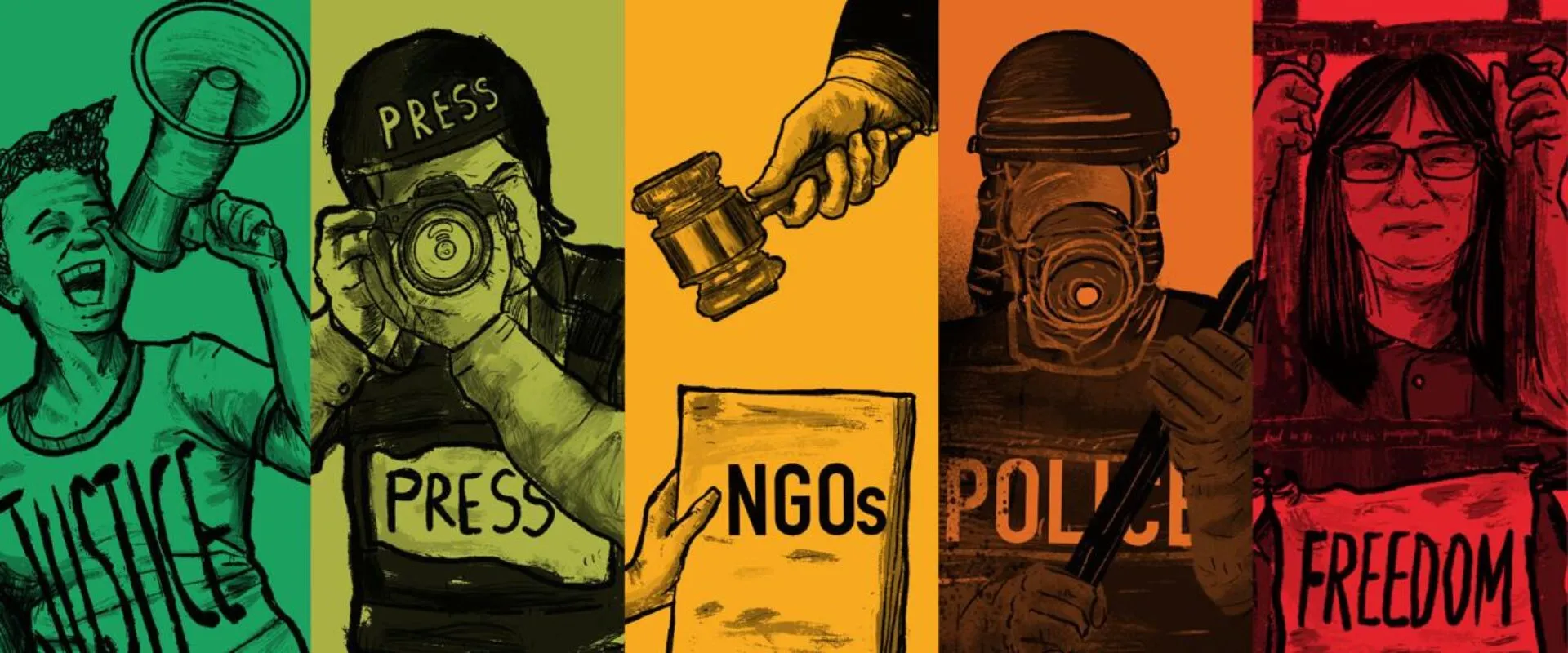
KAMPALA, Uganda — Uganda’s National NGO Bureau has ordered five prominent civil society organisations to immediately suspend all activities, citing national security concerns and ongoing investigations, a move that has deepened anxiety over shrinking civic space just days before the country’s pivotal general election.
Those affected are Chapter Four Uganda, the Alliance for Election Finance Monitoring (ACFIM), the Human Rights Network for Journalists-Uganda (HRNJ-U), the National NGO Forum, and the National Coalition of Human Rights Defenders — institutions that play central roles in election monitoring, governance oversight and human rights documentation.
In formal letters delivered to the organisations, the Bureau said intelligence reports indicate breaches of the NGO Act and engagement in activities “contrary to national interests”.
All programmes, offices and field operations were ordered suspended with immediate effect while investigations continue.
The enforcement order was swiftly escalated. The Inspector General of Police was instructed to ensure compliance, while financial institutions were directed to freeze the organisations’ bank accounts pending the conclusion of the inquiry.
We were caught by surprise.”
The directive stunned civil society leaders.
HRNJ-U Executive Director Robert Ssempala said his organisation had not been informed of any wrongdoing prior to the order.
“We don’t know what wrongdoing they believe we have committed, but we shall cooperate fully. To my knowledge, our licence has never been violated,” he said, noting that the notice arrived just days before Ugandans head to the polls.
At the National Coalition of Human Rights Defenders, Executive Director Robert Kirenga confirmed immediate closure of operations.
“Our staff and partners have been informed and we are complying,” he said.
ACFIM Executive Director Henry Muguzi said his organisation, whose work focuses on campaign finance transparency and electoral accountability, was equally blindsided.
“We have notified all stakeholders and put activities on hold. We hope the process will be transparent and fair,” he stated.
Mounting pressure on civic space
The suspension comes amid growing concern among domestic and international observers about Uganda’s political environment as voting day approaches.
Just two weeks earlier, Sarah Bireete, head of the Centre for Constitutional Governance, was arrested and charged over alleged unlawful acquisition of Electoral Commission data, an episode that sent shockwaves through the governance and advocacy sector.
Uganda will go to the polls on Thursday 15, January 2026 in what is shaping up to be one of the most competitive elections in decades. President Yoweri Museveni, 81, who has ruled since 1986, is seeking a seventh consecutive term under the banner of the ruling National Resistance Movement (NRM).
His principal challenger, opposition leader Bobi Wine, 43, of the National Unity Platform (NUP), has pledged sweeping political and economic reforms.
Campaigning has been marred by persistent reports of opposition disruptions, arrests of activists, restrictions on rallies, and heightened security deployments.
Election officials say 21.6 million registered voters will participate in three simultaneous ballots: the presidential race; parliamentary elections for 353 constituency MPs; and elections for 146 women representatives, one from each district.
Fears for election transparency
Human rights advocates warn that the suspension of key election watchdogs and rights monitors risks undermining transparency at a critical moment.
“These organisations are the backbone of independent election observation, human rights documentation and governance accountability,” said one senior Kampala-based analyst. “Removing them from the field at this stage raises serious questions about the integrity of the electoral environment.”
The National NGO Bureau has not yet publicly detailed the specific allegations against the affected groups, nor indicated when investigations are expected to conclude.
