

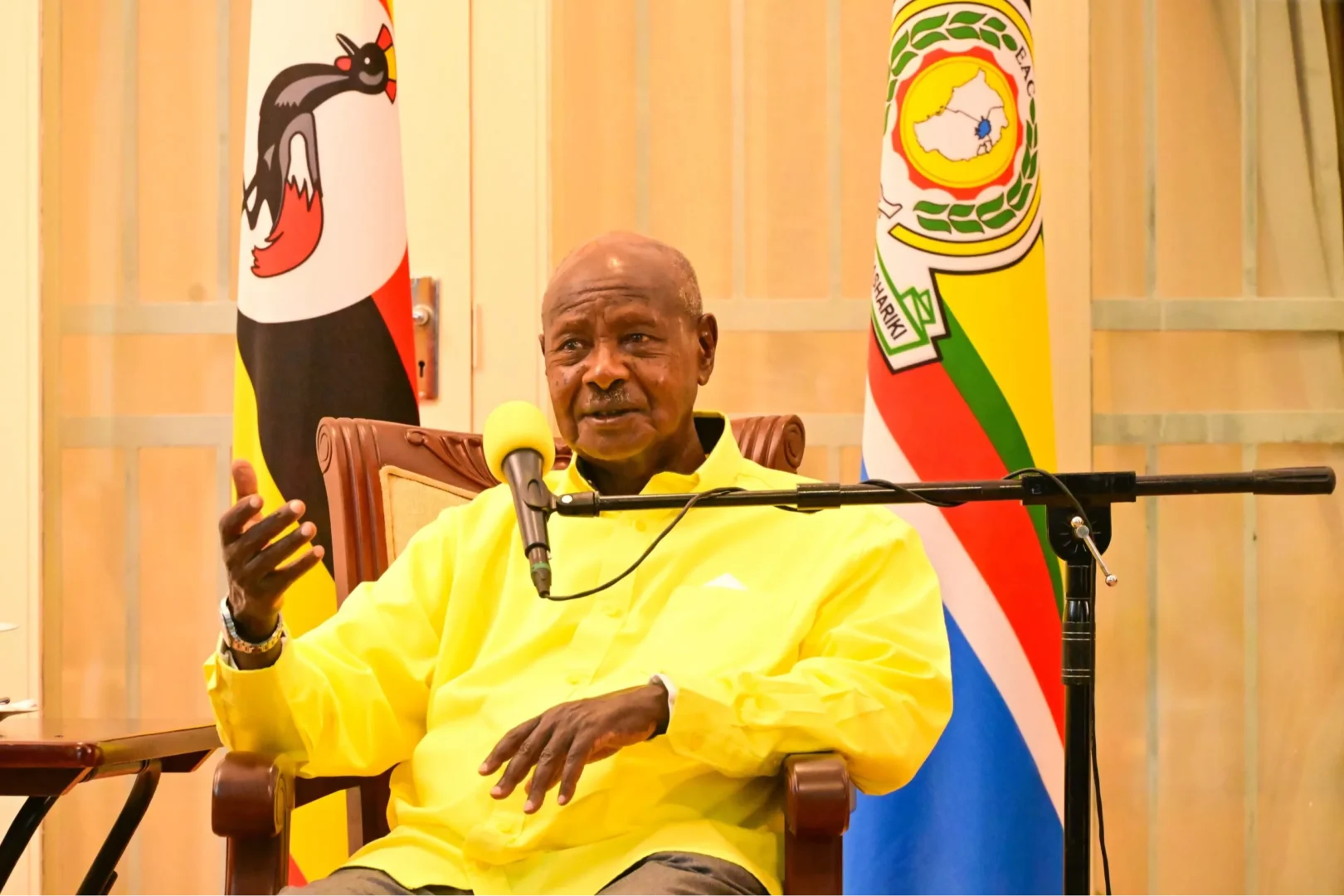
IGANGA, Uganda — President Yoweri Museveni has publicly disclosed deepening internal divisions within the ruling National Resistance Movement (NRM) in the Busoga sub-region, as his government seeks to maintain cohesion ahead of the 15 January 2026 general elections.
In a rare airing of grievances from within his own party, Museveni criticised senior NRM leaders for absenting themselves from a high-profile unity meeting, a sign of growing factionalism that could complicate electoral mobilisation in a region where the party has faced slipping support.
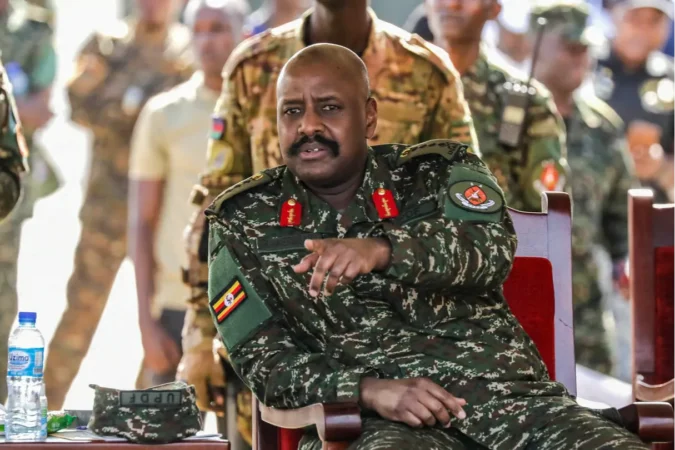
The President made the remarks on Saturday at Iganga Girls’ Secondary School, where the Busoga leadership had been convened for a meeting intended to strengthen party discipline and grassroots mobilisation.
Instead, it laid bare organisational weaknesses and leadership rivalries that risk undermining the party’s campaign efforts.
Museveni described the absence of First Deputy Prime Minister and Kamuli Woman MP Rebecca Kadaga and State Minister for Lands, Housing and Urban Development Persis Namuganza not as a simple scheduling oversight but as symptomatic of deeper problems within NRM’s regional structures.
“This meeting was supposed to solve your problems, not to expose them,” Museveni said. “But even before we start, we find confusion about invitations. These are issues I am now following up.”
He revealed that Namuganza had initially requested the meeting, held in Iganga, but was among those who did not attend, contributing to what he described as an avoidable political embarrassment.
“It is Namuganza who asked me to bring this meeting here,” he said.
“She told me, ‘Mzee, we must do it in Iganga.’ I agreed because I don’t have time to move everywhere. But now the same divisions have affected the meeting.”
The President also addressed Kadaga’s absence, recounting how he personally intervened to clarify communications after she told him she had not received an invitation.
“I rang my young sister Kadaga and asked her, ‘Where are you?’ She told me, ‘Mzee, I was not invited,’” he said.
Museveni then contacted Speaker of Parliament and NRM Second National Vice Chairperson (Female) Anita Among to understand the discrepancy. Among told him that all flag bearers had been invited through official party channels.
“I asked the Speaker, ‘Why was Kadaga not invited?’ … She told me, ‘All flag bearers were invited,’” the President said.
Kadaga later questioned the method of communication, reportedly asking whether the invitation had been broadcast on radio, highlighting the breakdown in internal outreach and coordination.
Museveni tasked local party officials and government representatives, including Resident District Commissioners (RDCs) and District Internal Security Officers (DISOs), with explaining how invitations were disseminated.
“If invitations were sent through RDCs, DISOs and party structures, then somebody failed to do their work,” he said, stressing the need for accountability.
Political backdrop: Factionalism and elections
The tensions in Busoga reflect a broader undercurrent of internal rivalry that has surfaced since the recent NRM Central Executive Committee (CEC) elections, where competing factions emerged over leadership roles.
The contest for positions such as the party’s vice-chair has deepened mistrust among senior figures, particularly between Kadaga and Speaker Among, as well as associates of Namuganza.
Analysts say these disputes have eroded party discipline and could jeopardise NRM’s chances in Busoga, a sub-region where support has weakened over successive elections.
In the 2021 general election, for example, Busoga was one of the few regions where president Museveni lost to opposition candidate Bobi Wine, revealing cracks in what was once a reliable NRM stronghold.
Against this backdrop, Museveni’s message was blunt: internal rivalries harm ordinary citizens more than political elites.
“This carelessness is not politics. It is harming the party and delaying service delivery,” he said. “You leaders quarrel, but it is the poor people who suffer.”
Calls for humility and unity
Museveni repeatedly underscored humility as a leadership virtue, suggesting that arrogance and factionalism have contributed to political disarray in Busoga.
“If I were not humble, I would not have managed Uganda,” he said. “Humility is not weakness. It is discipline. And without discipline, there is no organisation.”
He contrasted the situation in Busoga with what he described as greater cohesion in other regions, including Bukedi, Lango, Bugisu, West Nile and Acholi, where local leaders have reportedly managed to reconcile differences while still working collaboratively within the party.
Also Read: Kadaga rallies Busoga factory workers, farmers for Museveni ahead of 2026 elections
Despite the tensions, Museveni stressed the original purpose of the meeting, to align grassroots leaders with the NRM’s campaign messaging ahead of the elections, remained important. “I did not come here to take sides,” he said. “I came to remind you that the NRM message is one, lifting our people out of poverty, not building personal camps.”
Hajji Abubakar Walubi, NRM chairperson for Iganga District, told Museveni that invitations had been communicated through party structures down to parish level, a claim that the President said would be reviewed and corrected where necessary.
The incident highlights the challenges facing the ruling party’s cohesion in a pivotal election year, as it seeks not only to retain power nationally but also to shore up support in regions where political loyalty has become increasingly fluid.