


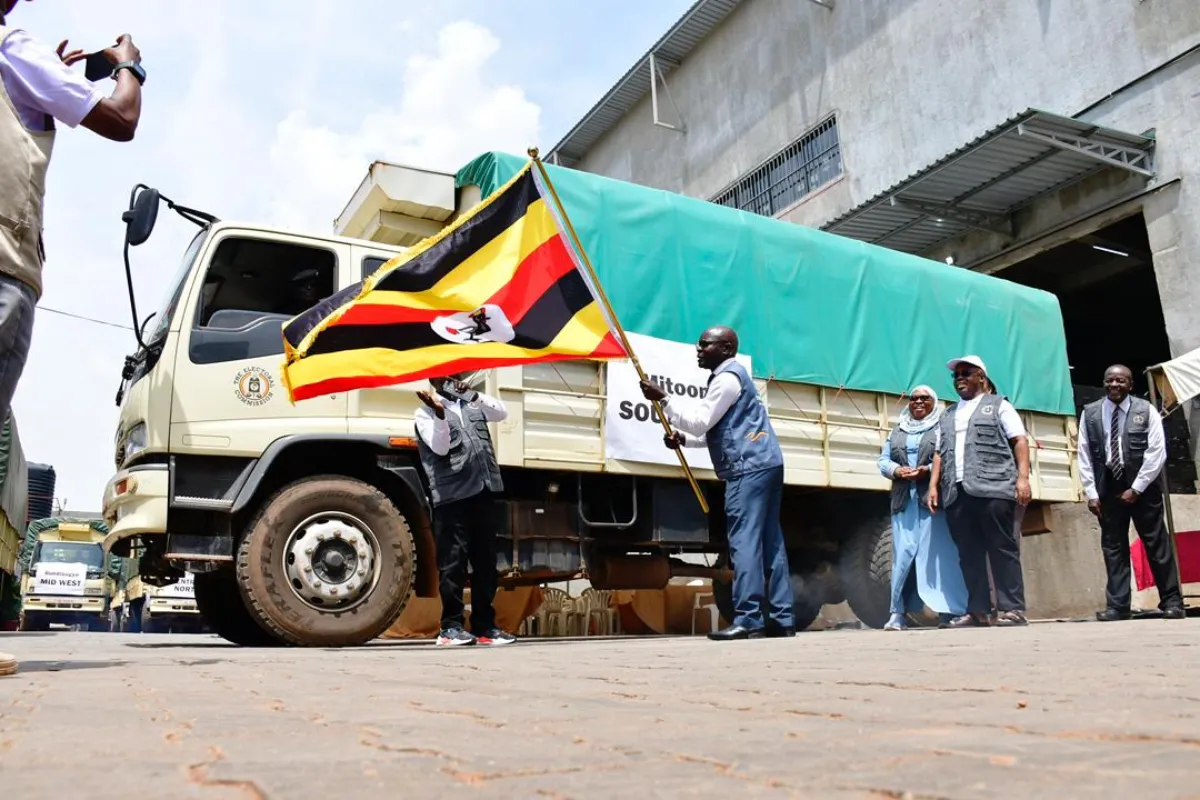
KAMPALA, Uganda — Uganda’s Electoral Commission (EC) has commenced the strategic dispatch of ballot papers and other voting materials to districts across the country as the nation prepares for the January 15, 2026 general elections.
EC chairperson Justice Simon Byabakama flagged off the first consignment of electoral kits on January 8 from the commission’s warehouse in Ntinda, on the outskirts of Kampala.
The phased dispatch will deliver voting materials, including ballot papers and Biometric Voter Verification Machines (BVVKs), to all 146 districts ahead of polling day.
Justice Byabakama said the distribution is being handled in stages to ensure that materials reach district EC offices securely and on time.
“All voting kits are kept at the district EC offices under security until polling day. Each kit belongs to a respective polling station, and if any kit is misplaced, it will affect that polling station because it is allocated to only one polling station,” he told reporters.
The commission has deployed security personnel to escort the consignments nationwide to prevent loss, tampering or delays during transit.
Officials said the phased approach reflects both logistical planning and the need to maintain tight security over sensitive election materials.
The dispatch comes shortly after the EC completed the reception of ballot papers for the presidential, parliamentary and local government elections, printed and delivered by a Dubai-based firm, Al Ghurair Printing and Publishing Company.
Preparations and voter procedures
In addition to the ballot paper rollout, the EC has issued detailed guidelines for voters to follow on polling day. Voters must present a National Identification Card or a Voter Location Slip at their designated polling stations. Those without paper documentation will have their details verified using the National Voters Register.
During polling, verification will be conducted with BVVKs, the same machines distributed with the ballot kits, using fingerprint or facial recognition before voters are issued ballot papers.
“After successful verification, the presiding officer will scan and issue the ballot papers to the voter,” EC spokesperson Julius Mucunguzi said.
To prevent double voting, election officials will mark each voter’s finger with indelible ink after casting their ballot. Polling stations are scheduled to open at 7:00 a.m. and close at 4:00 p.m. on election day.
Context and confidence measures
The 2026 election will mark another significant test for Uganda’s electoral system.
The EC has reiterated its commitment to delivering a credible voting process, and is also expected to employ additional transparency measures, including the scanning of ballot papers at polling stations to mitigate fraud, a step highlighted by electoral officials.
Also Read: Ugandans on voters’ register can vote without national IDs in 2026 elections, EC confirms
Concerns around voter registration and transparency have persisted, with some political figures urging further clarity on the final voters’ register ahead of polling day.
Security around the election remains a priority, with police registering and investigating political and electoral offences in the lead-up to voting, even as civic groups and religious leaders call for a peaceful and fair process.
Ugandans are expected to elect a president, members of parliament and local representatives as campaigns draw to a close days before voting begins.
