


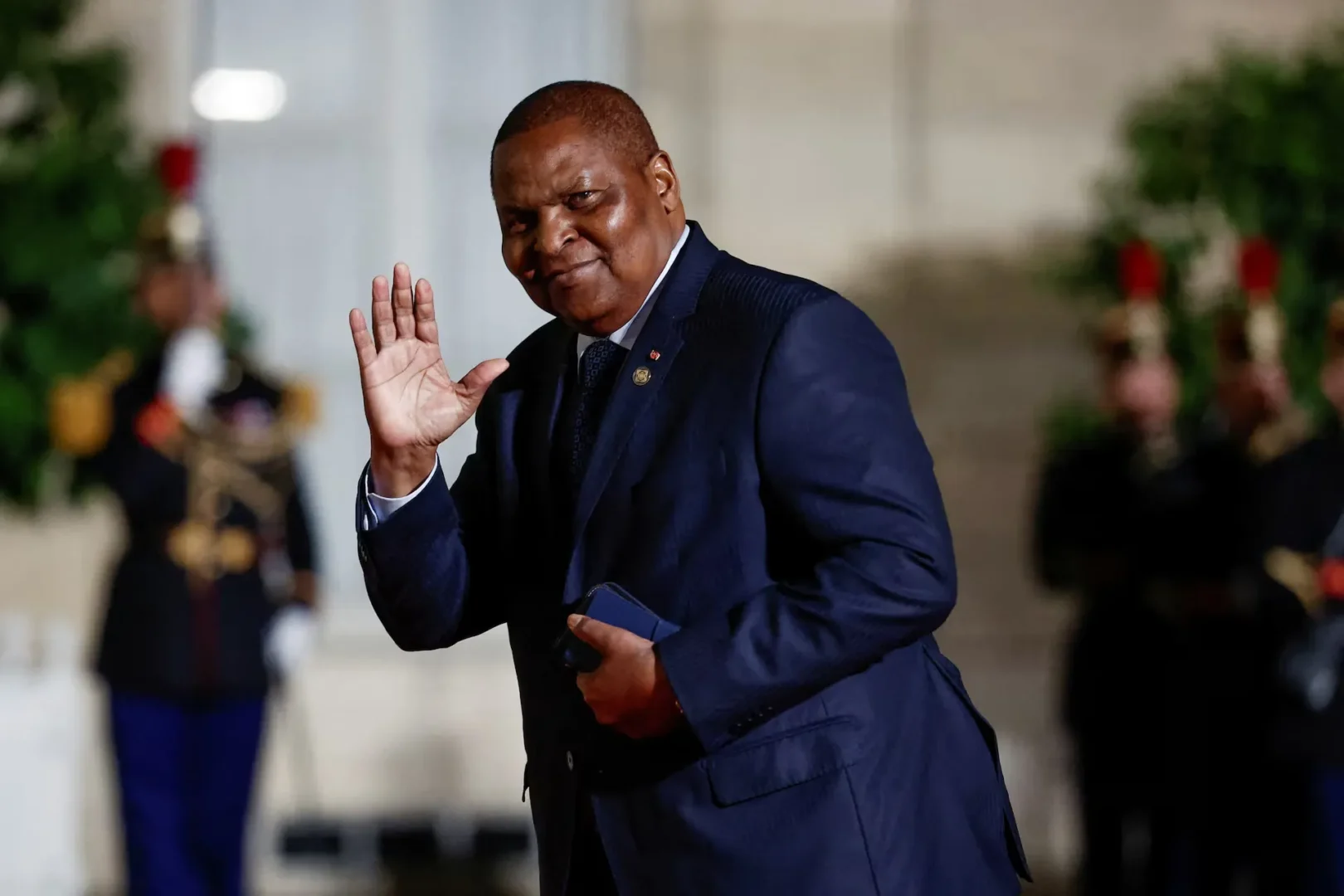
BANGUI, Central African Republic (CAR) — Provisional results from the Central African Republic (CAR) indicate that President Faustin-Archange Touadéra has secured a third term in office, winning an outright majority in the recent national elections.
The 68-year-old leader, a former mathematics professor, achieved a decisive victory in a contest marked by a significant opposition boycott and lingering questions over constitutional changes.
According to preliminary data released late Monday by the national election agency, Touadéra garnered 76% of the votes cast in the December 28 general election. His nearest rivals, former Prime Ministers Anicet-Georges Dologuélé and Henri-Marie Dondra, trailed significantly with 15% and 3% respectively.
While over 2.4 million citizens registered to vote, the process faced logistical hurdles. Observers noted that while the day was largely peaceful, there were notable delays caused by the late arrival of voting materials and discrepancies within the electoral registers.
The victory is being fiercely contested by the opposition. The main coalition, known as the BRDC, boycotted the polls entirely, arguing that the environment was not conducive to a fair election. Touadéra’s challengers have already signaled their intent to have the results annulled, citing widespread irregularities.
On Friday, Anicet-Georges Dologuélé expressed his lack of confidence in the process, stating there had been:
“a methodical attempt to manipulate” the outcome.
The government has categorically denied these allegations, maintaining that the electoral process was transparent. The Constitutional Court now has until January 20 to review any legal challenges before declaring the final, binding results.
Touadéra’s run for a third term was made possible by a controversial 2023 constitutional amendment that removed presidential term limits. Critics argue this move undermined the nation’s democratic foundations, while supporters believe it provides the continuity necessary for stability.
Also Read: Cameroon opposition leader flees to Gambia for ‘safety’ after election-linked protests
Since 2013, when rebels ousted former President François Bozizé, the CAR has been mired in chronic instability. Touadéra’s administration has relied heavily on external security support to maintain control, specifically enlisting:
- Russian Mercenaries (Wagner Group): Providing personal security and tactical support in exchange for access to gold and diamond reserves.
- Rwandan Defense Forces: Deployed to bolster the national army against resurgent rebel groups.
Despite its vast wealth in diamonds, gold, and uranium, the CAR remains one of the world’s poorest and most fragile states.
The United Nations estimates that approximately 50% of the population remains dependent on international humanitarian assistance.
Analysts suggest that Touadéra’s victory will likely cement Russia’s influence in the region, as Moscow continues to trade security expertise for extractive rights in this landlocked nation.
