


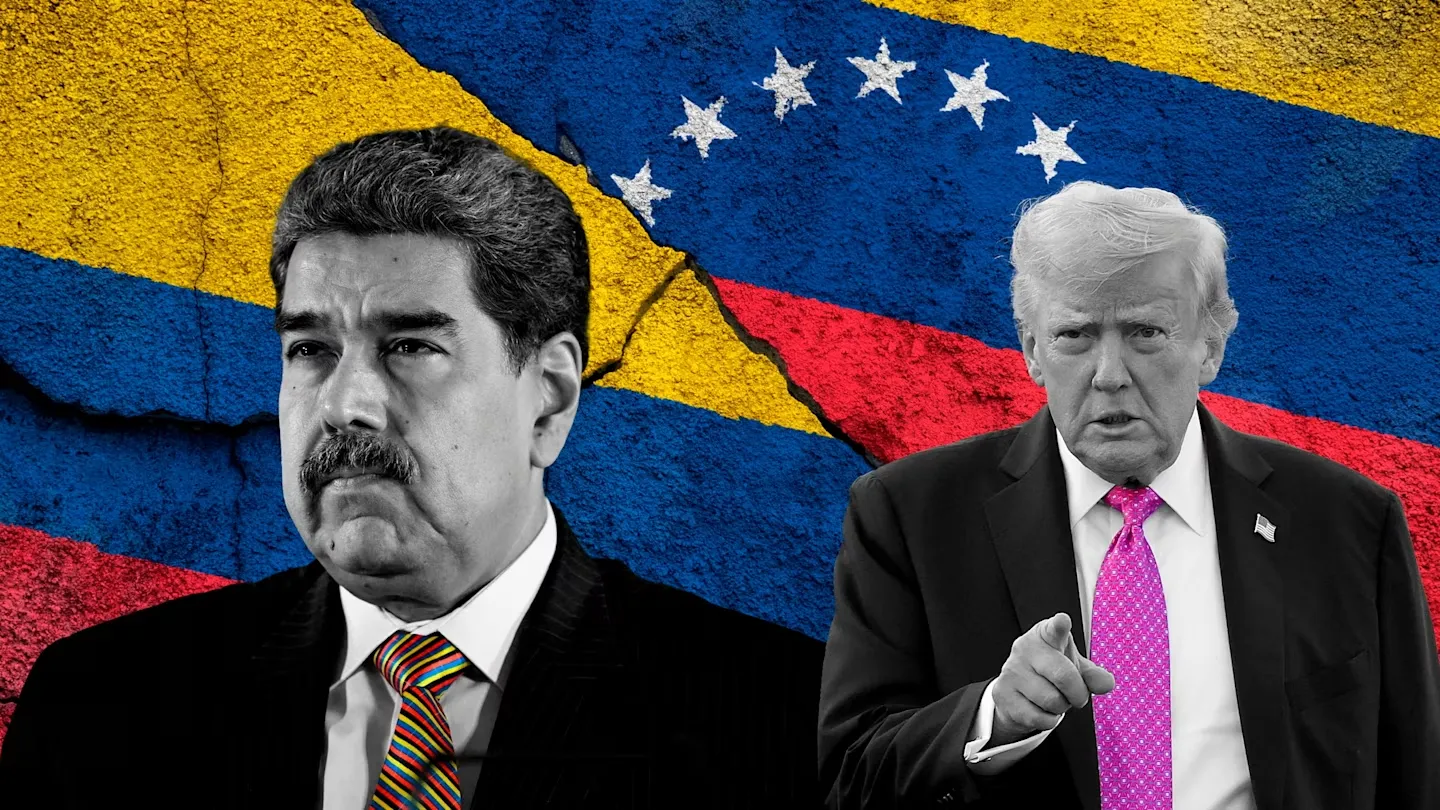
CARACAS, Venezuela — In a dramatic escalation of U.S. foreign policy in Latin America, President Donald Trump has announced that the United States will “run” Venezuela following a large-scale U.S. military operation that resulted in the capture of Venezuelan President Nicolás Maduro and his wife, Cilia Flores. The development marks a significant shift in U.S. engagement with Venezuela and has drawn swift global reaction.
The operation, described by U.S. officials as a “large-scale strike,” involved targeted attacks on critical Venezuelan military infrastructure in Caracas and other regions, including facilities within the capital. Explosions were widely reported early Saturday, with smoke seen rising over La Carlota airfield and other strategic sites.
President Trump confirmed that he had ordered the operation and said the United States would assume control of Venezuela temporarily.
“We’re going to run the country until such time as we can do a safe, proper and judicious transition,” Trump said in a press conference following the announcement.
Trump’s remarks were made at his Mar-a-Lago resort in Florida, where he was flanked by senior U.S. officials, including Secretary of State Marco Rubio and Secretary of Defense Pete Hegseth.
According to the president, no U.S. military personnel were killed during the operation, which he hailed as one of the most powerful displays of American military capability in recent history.
The Venezuelan opposition has reacted positively to the capture, with prominent leader María Corina Machado saying the operation marked a turning point. “What had to happen is happening,” Machado said, pledging efforts to “build a new Venezuela.”
U.S. plans and international reaction
Trump also signaled U.S. interest in Venezuela’s oil sector following the operation and said American companies would play a strong role in its recovery and reconstruction.
Reports indicate that U.S. forces seized Maduro and his wife and transported them aboard a U.S. warship, with plans to bring them to New York to face criminal charges related to a U.S. indictment accusing Maduro of involvement in narco-terrorism and drug trafficking.
International responses have been sharply divided.
Russia, Iran and Cuba condemned the U.S. military action, calling it a violation of Venezuelan sovereignty and international law.
In contrast, some Venezuelan opposition figures welcomed the move as a long-awaited end to authoritarian rule.
The Venezuelan government, meanwhile, denounced the strikes as “military aggression” and declared a state of emergency.
Also Read: Venezuela condemns Trump’s ‘colonialist threat’ after he declares airspace closed
Vice President Delcy Rodríguez demanded immediate proof of life and the location of President Maduro and his wife following reports of their capture.
Domestic context and implications
The strikes and capture come amid months of mounting tension between the U.S. and the Maduro administration, including a significant U.S. military buildup in the region and prior actions against vessels allegedly tied to narcotics trafficking.
Venezuelan state media continues to broadcast pro-Maduro sentiment, even as Caracas deals with power outages and the fallout of the military strikes.
Despite Trump’s stated intentions to oversee a transition, U.S. control of Venezuela raises profound questions about sovereignty, international law and regional stability.
As it stands, there are no independent confirmations of the operational details from Venezuelan authorities, and the global community watches closely as events unfold.
