

KAMPALA, Uganda — Diplomacy is often conducted in muted tones, behind closed doors and through carefully worded communiqués. But in both Kampala and Washington this December, discretion has given way to abrupt disruption.
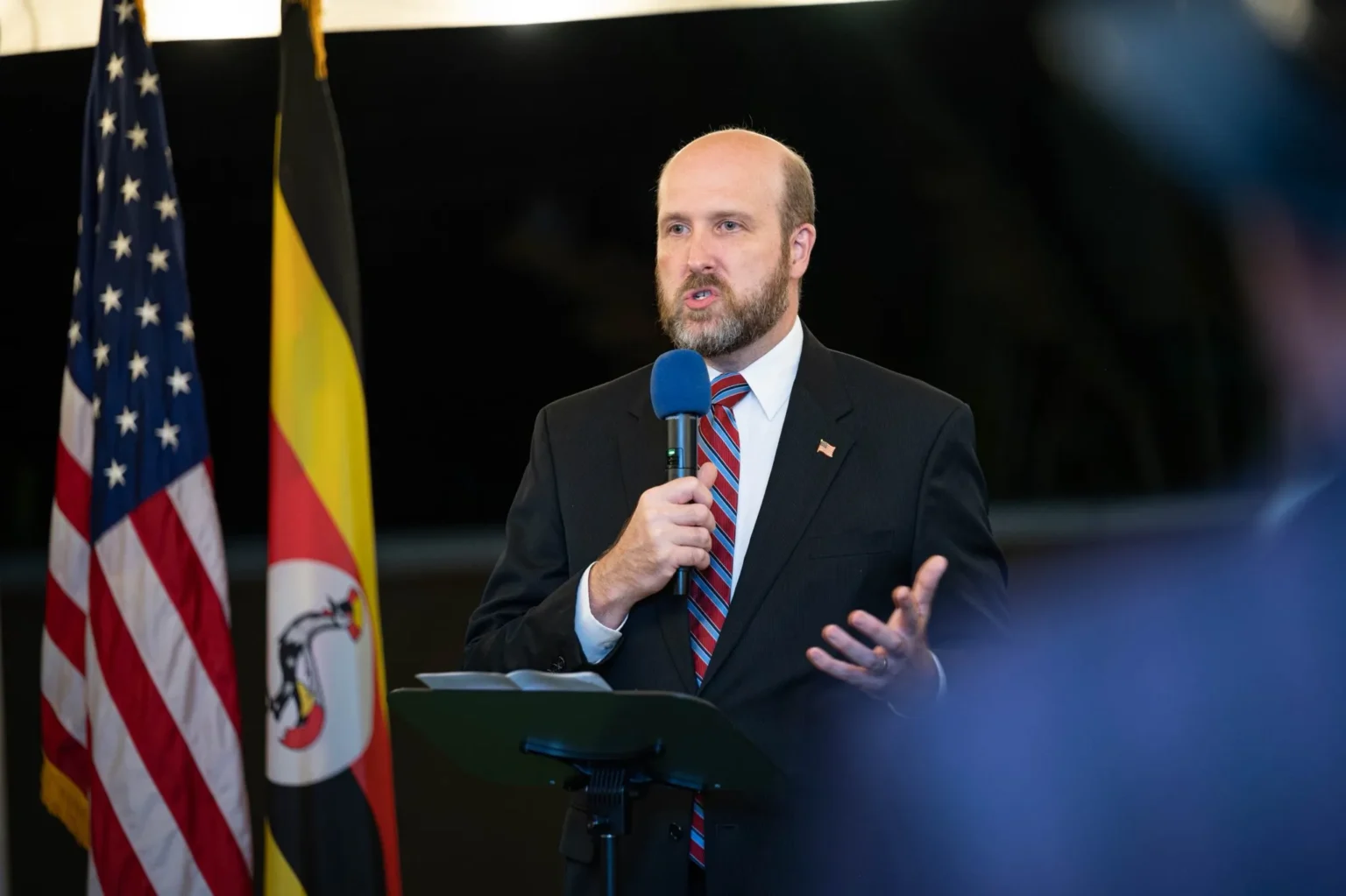
The Trump administration has recalled nearly 30 senior United States diplomats worldwide, including U.S. Ambassador to Uganda William W. Popp, in a sweeping realignment of America’s foreign service aimed at enforcing stricter ideological loyalty to the White House’s “America First” doctrine.
Ambassador Popp has been instructed to vacate his post by mid-January 2026, bringing a sudden end to a tenure that had already been marked by tension with Uganda’s political and military leadership.
A recall framed as policy, felt as punishment
While the U.S. State Department maintains that the recalls reflect a routine prerogative of a new administration, diplomatic analysts say the scale and timing of the move are highly unusual.
Career ambassadors (traditionally insulated from partisan transitions), are typically allowed to complete their postings or oversee orderly handovers. In this case, many are being withdrawn simultaneously, across Africa, Europe, and the Middle East.
For Uganda, the decision resonates far beyond bureaucratic reshuffling.
Ambassador Popp’s recall follows months of strained relations triggered by U.S. sanctions imposed on senior Ugandan police officers accused of human rights abuses.
Those measures, announced under the Global Magnitsky framework, drew sharp criticism from Kampala and sparked an unprecedented public confrontation in October 2024.
The ultimatum that changed the tone
That confrontation escalated when Gen. Muhoozi Kainerugaba, Uganda’s Chief of Defence Forces and son of President Yoweri Museveni, issued a public ultimatum on social media, demanding that Popp apologise to his father for what he described as “undiplomatic conduct.”
“If he doesn’t apologise, he should leave Uganda,” Muhoozi wrote at the time.
The remarks, widely criticised by diplomats as a breach of protocol, were initially dismissed by Washington as political theatre. The State Department stood by its ambassador, reaffirming support for diplomatic independence. Yet with the arrival of a second Trump administration, and its stated intent to overhaul the foreign service, the sudden recall of Amb. Popp has reignited debate over whether Washington has quietly conceded ground.
A diplomatic vacuum at a critical moment
The timing of the recall has raised particular concern. Uganda is heading into a highly contested general election scheduled for January 15, 2026, with President Museveni seeking to extend his four-decade grip on power.
Historically, the presence of a Senate-confirmed U.S. ambassador during election periods has carried symbolic and practical weight—facilitating high-level engagement, election monitoring coordination, and crisis diplomacy.
Popp’s departure means the U.S. mission in Kampala will likely be led by a chargé d’affaires during the final days of campaigning and voting.
Opposition leaders, including National Unity Platform (NUP) leader Robert Kyagulanyi, popularly known as Bobi Wine, have already reported arrests, surveillance, and restrictions on movement.
The government denies allegations of political repression, framing its actions as necessary to maintain national security.
Africa-wide signal, not an isolated case
Uganda is not alone. The recall wave has disproportionately affected Africa, with ambassadors withdrawn from Nigeria, Rwanda, Senegal, Niger, Somalia, Burundi, Cameroon, and Mauritius, among others. Critics argue the move risks weakening U.S. diplomatic engagement on a continent where global competition for influence is intensifying.
Former U.S. diplomats warn that removing experienced career envoys, particularly in fragile or politically sensitive states, creates openings for rival powers.
Also Read: US cuts Ugandan visa validity from two years to three months over security and fraud concerns
“Diplomacy is not just about policy alignment; it’s about institutional memory and trust,” said one retired ambassador familiar with the region. “When you pull out seasoned professionals, others step in.”
China and Russia have significantly expanded their diplomatic and economic footprints across Africa in recent years, often emphasising non-interference in domestic politics, an approach that resonates with several incumbent governments.
Beyond personalities: What is at stake
For ordinary Ugandans, the recall of an ambassador may appear distant. Yet U.S.–Uganda relations underpin billions of dollars in health, humanitarian, and security cooperation, including major programmes combating HIV/AIDS, malaria, and regional terrorism.
The absence of a fully empowered ambassador during an election cycle risks slowing decision-making, weakening accountability mechanisms, and recalibrating how Washington is perceived in Kampala.
As one civil society analyst put it, “There is a fine line between ‘America First’ and ‘America Absent.’ In moments of political tension, that difference matters.”
A broader rewriting of diplomatic norms
As William Popp prepares to leave Entebbe just days before Ugandans head to the polls, his recall underscores a broader transformation underway in U.S. foreign policy, one that places ideological alignment above the traditional norms of diplomatic continuity.
Whether this marks a temporary recalibration or a long-term shift remains to be seen. For Uganda, however, the immediate reality is clear: it will navigate one of its most consequential elections in decades without the steady presence of its most influential Western diplomatic partner.
Gen. Muhoozi Kainerugaba’s ultimatum may not have directly caused the recall. But in the volatile geopolitics of 2025, it has coincided with an outcome that fundamentally alters the diplomatic landscape—raising a final, unresolved question: who, or what, fills the vacuum left behind?