


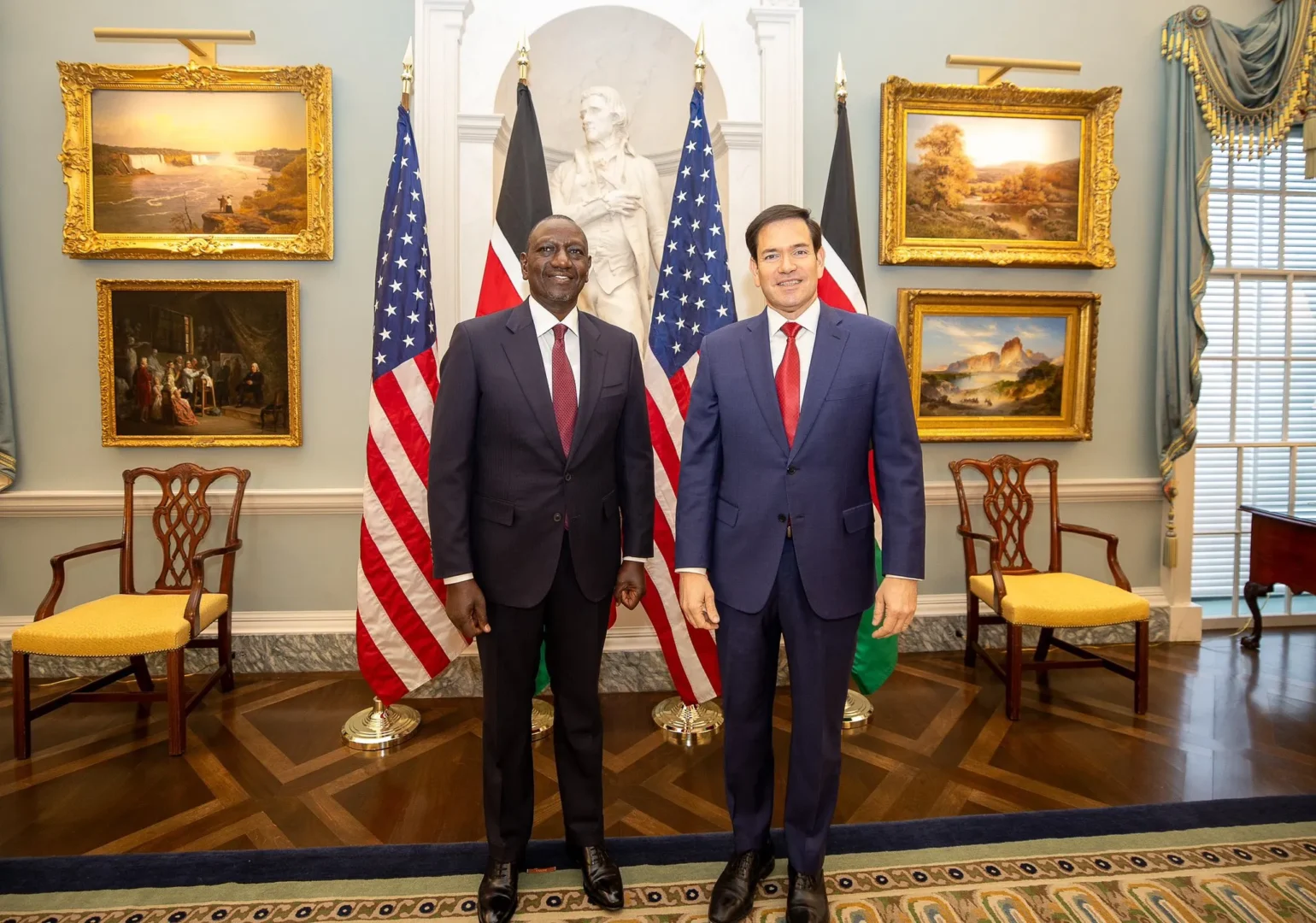
NAIROBI, Kenya — Kenya has formalized a landmark five-year health agreement with the United States, securing a $2.5 billion deal aimed at combating infectious diseases and boosting healthcare accountability.
The agreement is the first of its kind signed under the foreign aid overhaul initiated by the administration of US President Donald Trump.
The government-to-government pact, signed by President William Ruto and US Secretary of State Marco Rubio, signals a shift in the US’s approach to foreign assistance, aligning with the administration’s new “America First Global Health Strategy.” This strategy makes aid contingent on negotiations designed to “cut waste and advance US priorities.”
Under the terms of the deal, the US will contribute $1.7 billion, while the Kenyan government will cover $850 million and gradually assume more operational responsibility over the program’s lifespan.
Speaking at the signing ceremony, Secretary of State Rubio described Kenya as a “longstanding American ally” and hailed the agreement as a “landmark agreement.” He praised Kenya’s willingness to lead in international security efforts, particularly its contribution to the UN-backed mission to combat gangs in Haiti.
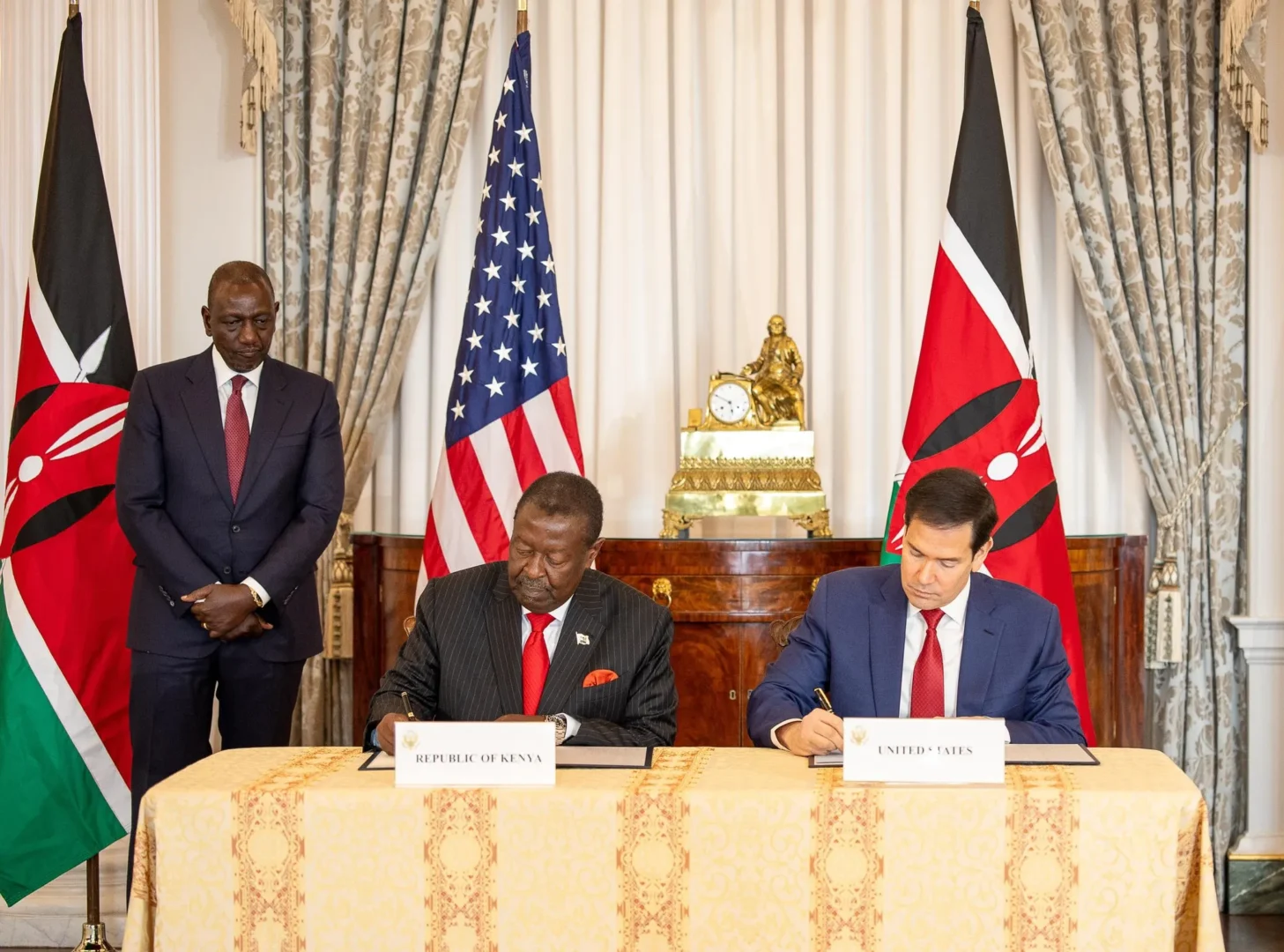
“If we had five or 10 countries willing to step forward and do just half of what Kenya has done already, it would be an extraordinary achievement,” said Rubio.
The Secretary of State explained the reasoning behind the new direct-to-government aid model:
“We are not going to spend billions of dollars funding the NGO industrial complex while close and important partners like Kenya either have no role to play or have very little influence over how health care money is being spent,” he said.
Health goals and accountability
The funding is specifically targeted at critical health areas, including:
- Prevention and treatment of HIV/Aids, malaria, and tuberculosis.
- Maternal care and polio eradication.
- Infectious disease outbreak response and preparedness.
President Ruto assured that the funds would be used effectively to address Kenya’s domestic health priorities, such as purchasing modern hospital equipment and expanding the health workforce.
“I assure you that every shilling and every dollar will be spent efficiently, effectively, and accountably,” Ruto added.
Data privacy fears persist
Despite the emphasis on transparency, the deal has provoked significant controversy over fears that it grants the US real-time access to sensitive patient data.
Health Minister Aden Duale attempted to quell these concerns, insisting that “only de-identified, aggregated data” would be shared. He added a forceful guarantee regarding Kenyan sovereignty over patient records:
“Your health data is a national strategic asset,” Duale added.
However, activists and legal experts have demanded the full text of the agreement be made public. Lawyer Willis Otieno voiced specific concerns on social media:
“What specific data categories are being shared? Are genomic data, disease patterns, mental health data, insurance claims, hospital records, or biometrics included? If not, why is that not explicitly written?”
Well-known whistle-blower Nelson Amenya echoed the call for transparency, urging the Kenyan government to release the full agreement so “we can read it for ourselves.”
US officials have not yet commented on the specific data sharing concerns raised by Kenyan civil society. US officials expect several other African countries to sign similar agreements by the end of the year.
