


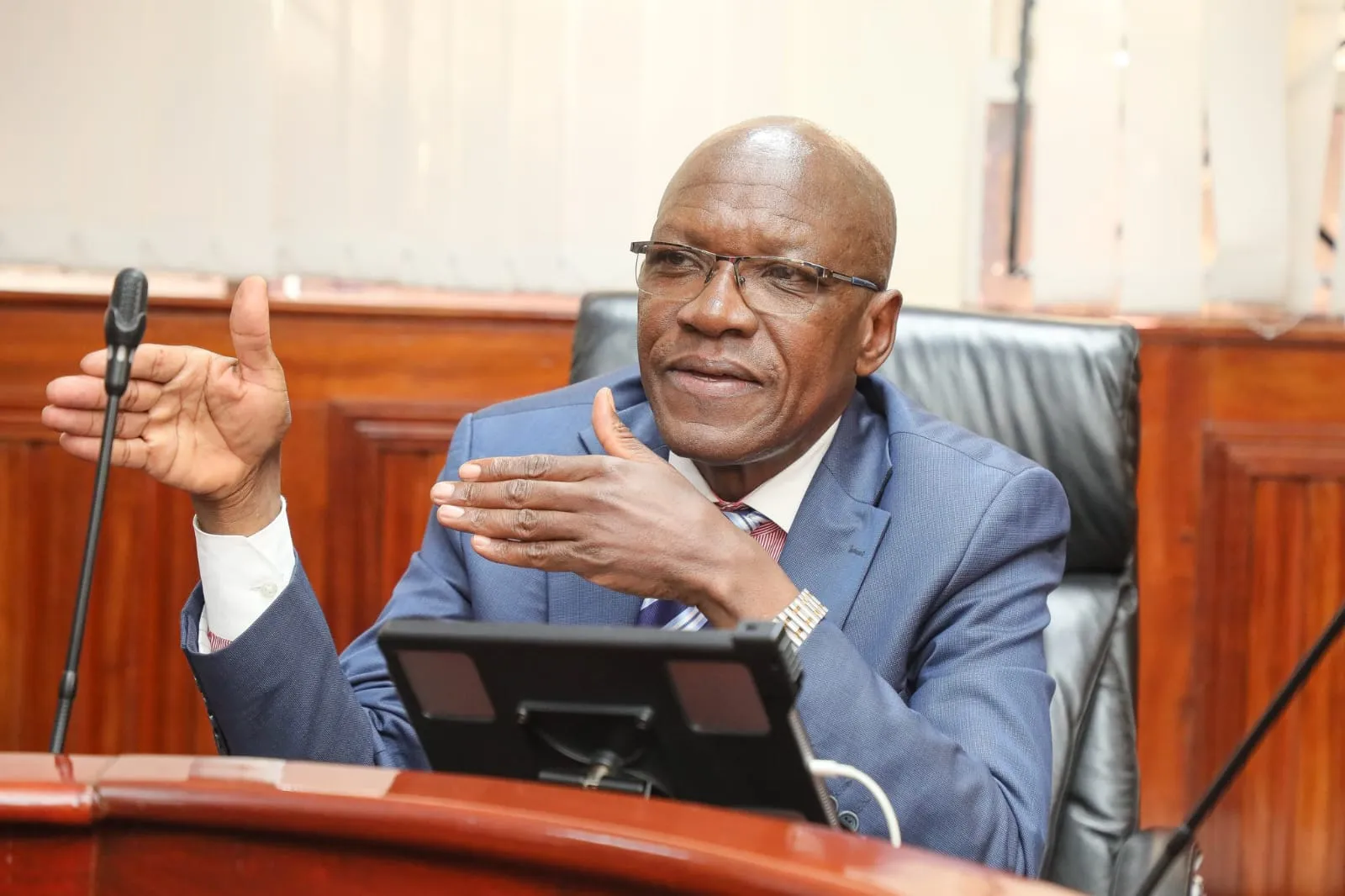
NAIROBI, Kenya — Kakamega Senator Boni Khalwale was ejected from the Senate on Tuesday after he staunchly refused to withdraw remarks alleging that former President Uhuru Kenyatta had personally intervened to secure the release of two Kenyan political activists detained in Uganda.
The controversy arose during a debate when Senator Khalwale, who serves as the Senate Majority Whip, drew parallels between Kenyan children reportedly stranded abroad and the high-profile detention of the two activists.
He questioned why the alleged intervention came from the former President rather than the current administration.
“The issue of the children who are out of the country is no different from the two Kenyan political activists who were locked up in Uganda for a long time. It disturbs me that it took the intervention of the former President, and not the current President,” said the Senate Majority Whip.
The substantiation conflict
Khalwale’s claim immediately prompted an objection from Nandi Senator Samson Cherargei, who challenged his colleague to provide evidence for the sensitive assertion or withdraw it, citing the importance of adhering to parliamentary rules.
“We must stick to the rules, Mr Speaker; when the Senator, a Chief Whip of government, goes out on record and says that the former President intervened for release of Kenyans, can he provide the evidence before this House because we don’t want hearsays from chang’aa drinking dens in Ikolomani coming to Senate. He should take chang’aa and stay there, don’t bring those things here,” Cherargei said.
Senate Speaker Amason Kingi supported the point of order, directing Khalwale to either substantiate his claim with proof or retract it and apologize.
“The point of order is: is that factual? If you cannot provide evidence, you proceed to withdraw and apologise,” Kingi ruled.
Refusal and ejection
Khalwale defiantly pushed back, arguing that the matter was self-evident and did not require formal proof.
“You should further advise the Senator of Nandi that he is thickets away from my experience in the Parliamentary palace. If he wasn’t, he would know that in this Parliament, a ruling has been made that a member is not expected to substantiate the obvious,” he responded.
As tensions escalated, the Speaker repeatedly insisted that Khalwale comply with the Standing Orders. The Senator attempted to circumvent the ruling by remaining silent, stating: “I started this journey of politics at the age of 22. We fought for this Constitution for so long that rather than respond to all things that have been said here, I choose to keep quiet.”
Speaker Kingi firmly rejected the evasion, insisting that silence was not an option: “If you cannot substantiate, the other option is not to keep quiet; keeping quiet is not an option under our Standing Orders. If you cannot substantiate, you proceed to withdraw and apologise,” the Speaker insisted.
Khalwale then accused his colleagues of using points of order to suppress free debate, challenging Cherargei directly:
“If the Nandi Senator is uncomfortable with the factuality of what I am saying, let him express his discomfort and not hide in a point of order. You think my pedigree is someone who does not know the difference between…”
In a final appeal before the ruling, Khalwale invoked a historical justification for his freedom of speech: “Kenyans died for freedom of speech, please understand these things that we were there before you were there.”
Speaker Kingi, noting Khalwale’s deliberate silence in response to the order, concluded that the Senator had failed to substantiate his claim and ruled him out of order.
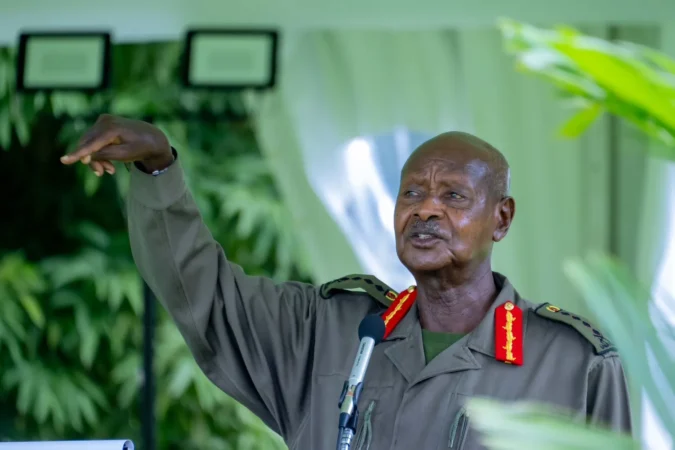
Also Read: Museveni claims freed Kenyan activists planned to train Ugandan youths to riot
“You are choosing to stay silent; therefore, it means you failed to substantiate, and the natural consequence will flow, and I will rule you out of order and ask you to leave the chamber,” the Speaker declared.
Background on the detained activists
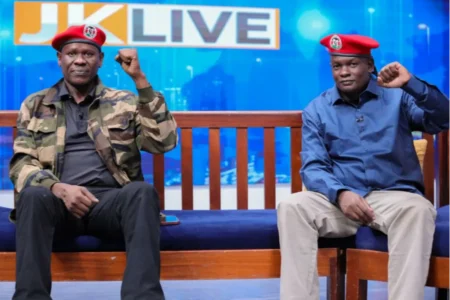
The two Kenyan activists, Bob Njagi and Nick Oyoo, were detained in Uganda and held incommunicado by the country’s military special forces for 39 days.
Amnesty International later disclosed that their release followed high-level negotiations, confirming intervention by former President Uhuru Kenyatta.
Felix Wambua of the Free Kenya Movement previously acknowledged the critical role of the former Head of State, stating: “Without the intervention of former President Uhuru Kenyatta, I don’t know if we would have managed.”