

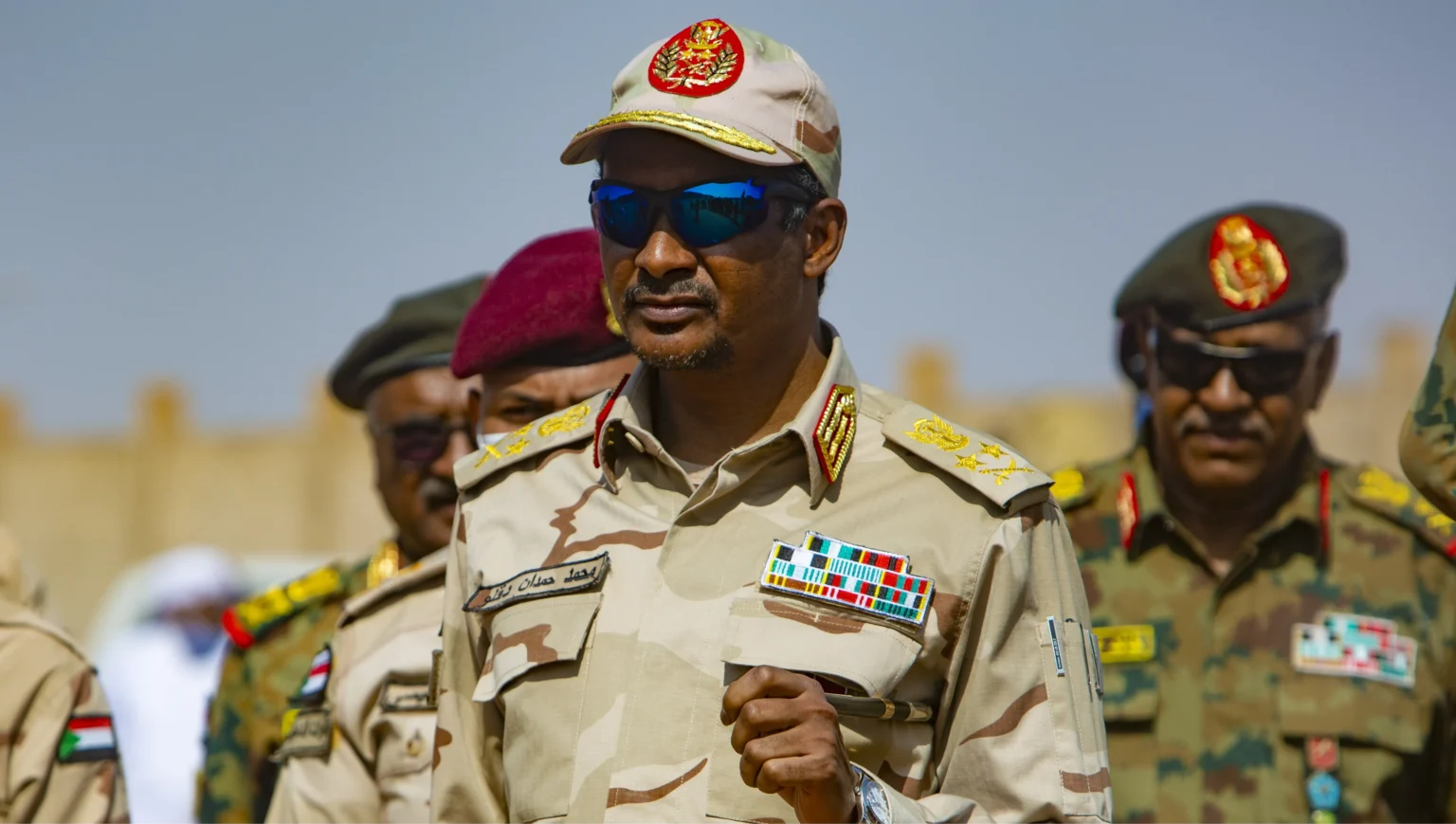
KHARTOUM, Sudan — Sudan’s paramilitary Rapid Support Forces (RSF) announced on Thursday that it has agreed to a proposal from the United States for a humanitarian ceasefire. The announcement came shortly after the group seized the city of El-Fasher in the western Darfur region, a city where a UN-backed global hunger monitor has confirmed famine conditions.
As of the RSF statement, Sudan’s military-led government has not yet issued a formal response to the proposal.
The truce and humanitarian crisis
The RSF’s decision to accept the truce, proposed by the US alongside the United Arab Emirates, Saudi Arabia, and Egypt, aims to mitigate a catastrophic situation.
The 18-month siege of El-Fasher by the RSF had blocked humanitarian aid despite repeated UN appeals, resulting in starvation among the vulnerable residents who were unable to flee.
In its statement, the RSF affirmed its commitment to entering the truce:
“in order to address the catastrophic humanitarian consequences of the war” and to allow the “urgent delivery” of aid.
The group also expressed its desire to move toward discussions focused on ending hostilities “in a manner that addresses the root causes of the conflicts” and “creates the appropriate environment for a just, comprehensive, and lasting peace.”
Allegations and military posturing
The announcement follows a period of intense international scrutiny of the RSF over reports of mass killings committed by its soldiers. While the RSF has denied the most serious allegations, it has conceded that “violations” were committed by individuals and has arrested some of its fighters.
The civil war between Sudan’s army and the RSF broke out in April 2023. Both parties have agreed to various ceasefire proposals throughout the conflict, though none have successfully held.
On Tuesday, prior to the RSF’s statement, Sudan’s Defence Minister Hassan Kabroun thanked US President Donald Trump’s administration for its “efforts and proposals to achieve peace,” in a speech broadcast on national television. However, he maintained that military action would continue:
“Our preparations for war are a legitimate national right,” he added, confirming that preparations for the Sudanese people’s battle against the RSF were ongoing.
Sudan’s Chargé d’affaires in Nairobi, Mohamed Osman Akasha said on Wednesday that the military-led government would agree to stop fighting only if the RSF was dismantled, surrendered its weapons, and its leader was held accountable.
“I have no information about a proposal for truce. The only thing that I know is the government of Sudan, the people of Sudan are very determined to defeat this militia,” he said.
A crisis of unimaginable suffering
The RSF’s truce announcement comes as humanitarian organizations warn of a deepening crisis. An aid organization recently alerted that a network of locally run community kitchens—crucial lifelines in areas inaccessible to international groups—is on the verge of collapse due to shortages and volunteer exhaustion.
A report from Islamic Relief quoted one volunteer estimating that most of these kitchens will close within six months.
The conflict has created what the UN calls the world’s largest humanitarian crisis, with over 24 million people facing acute food shortages in Sudan.
Also Read: US sanctions Sudan after finding use of chemical weapons in civil war
Following the RSF’s capture of El-Fasher, the UN refugee agency said more than 60,000 people have fled the city.
Survivors who escaped the siege recounted systematic killings and “unimaginable” suffering. One survivor, Ezzeldin Hassan Musa said:
“We saw people murdered in front of us. We saw people being beaten. It was really terrible,” Ezzeldin Hassan Musa said.
Last week, RSF leader Gen Mohamed Hamdan Dagalo announced an investigation into what he termed “violations” by his soldiers in El-Fasher, and the group has since released footage allegedly showing the arrest of a fighter accused of carrying out executions.
The UN’s Human Rights Council is scheduled to hold an urgent session on the situation in El-Fasher on November 14.