


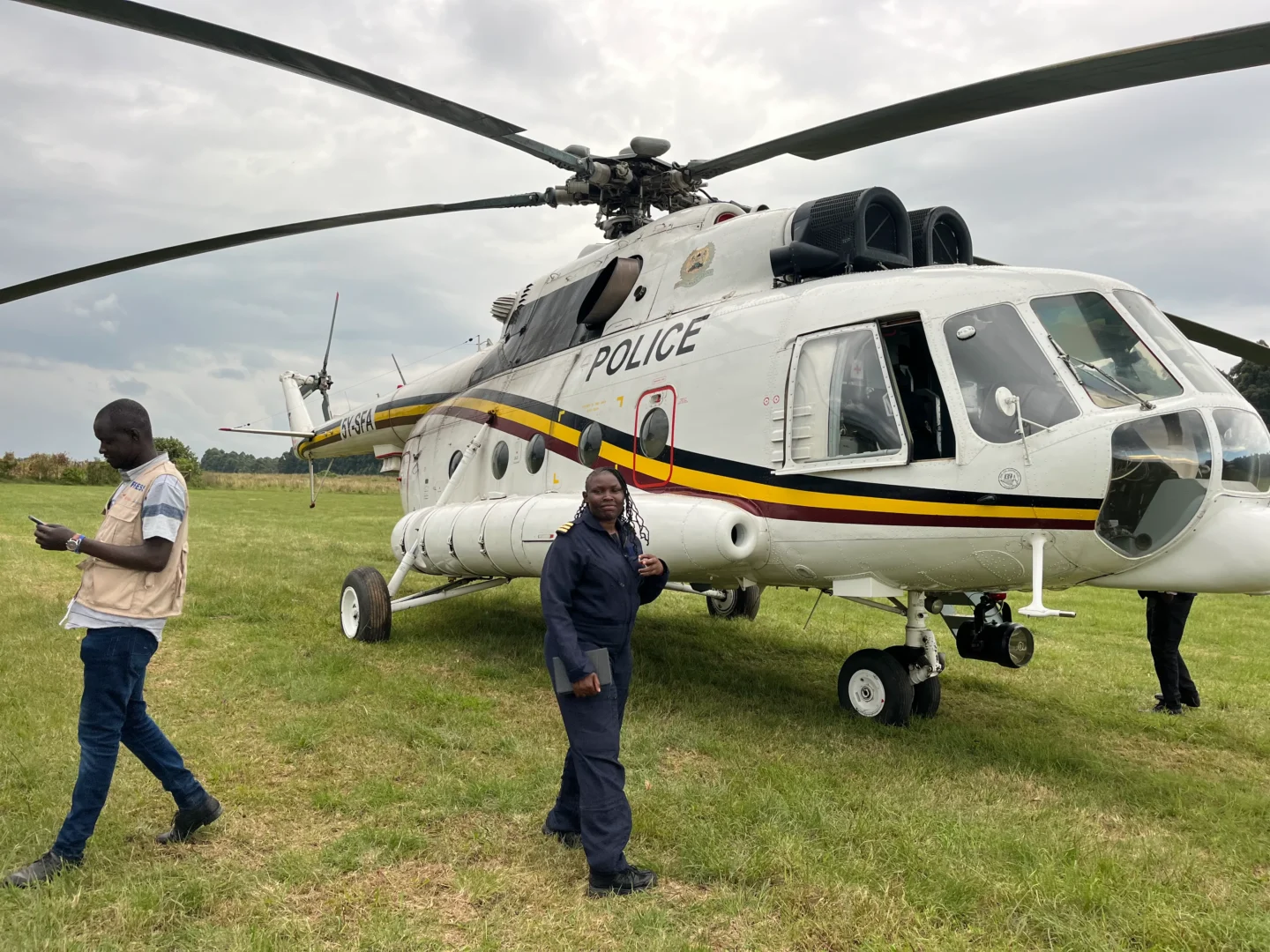
ELGEYO MARAKWEt, Kenya — The National Police Service (NPS) is grappling with renewed concerns over the airworthiness of its geriatric helicopter fleet following a dramatic hard landing during a flood rescue operation.
On Sunday, an Mi-17 helicopter, registered as 5Y SFA and operated by the NPS Air Wing, was engaged in life-saving missions in flood-stricken Chesongoch, Marakwet East, when its lift reportedly failed mid-flight.
The aircraft subsequently bounced upon hitting the ground. While fortunately, no fatalities were reported, the incident’s video footage quickly went viral, fueling public anxiety about the overall condition of the police air assets.
Critically, this was the second such mechanical failure in quick succession for the same aircraft, which had made an emergency landing in Mulot, Bomet County, just three weeks prior. The chopper is acknowledged as one of Kenya’s most dated operational police aircraft.
The beleaguered helicopter, which has come under intense public scrutiny for its maintenance record, has been performing an average of four daily trips to and from the tragedy area, underscoring the high operational tempo required during the relief efforts.
The demanding mission is being flown by Chief Inspector Ruth Rotiken, who earlier shared her personal experience navigating the emotional and physical challenges of the response.
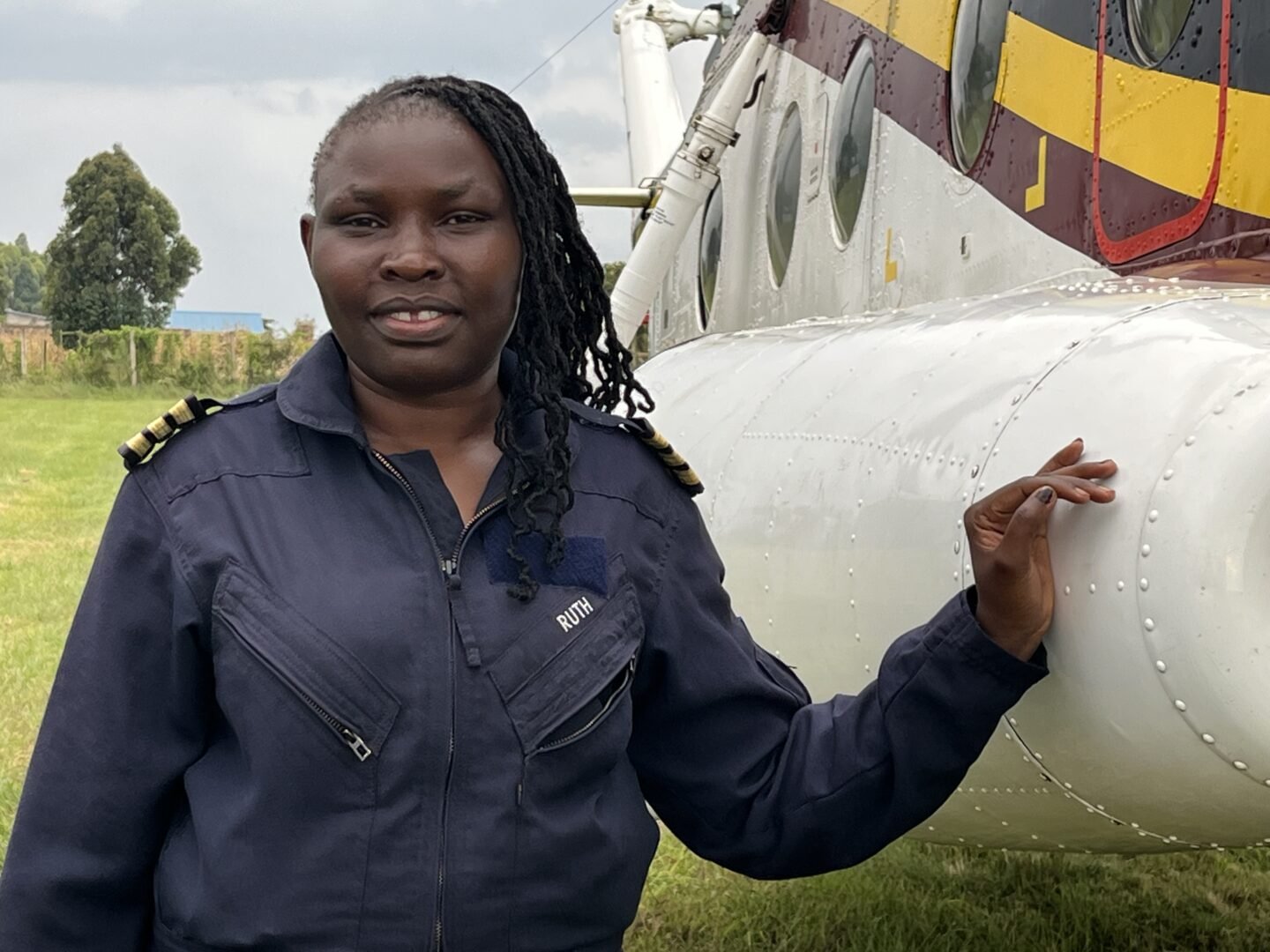
Despite her extensive career in disaster management, Rotiken expressed profound distress over the scenes of devastation in Marakwet East.
Her direct account of the emotional toll was:
I have been traumatized to see the suffering of children, women, and all residents in affected areas. I pray that God comforts them.”
Chief Inspector Rotiken, a pilot with a decade of experience, noted that while the emotional burden is heavy, she maintains focus on her duty to support the ongoing rescue and relief operations. Operating from the Eldoret Airstrip, she has been instrumental in ferrying humanitarian aid, transporting the injured and the deceased, and moving officials coordinating the mission.
She affirmed her commitment to the essential nature of her role, stating:
I am used to this kind of work, and we have to do it so that we help those in need during such occurrences.”
The 38-year-old officer and mother manages to balance her highly demanding professional responsibilities with her family life, and she expressed pride in her service to the National Police Service (NPS) and gratitude for the backing she receives from her superiors. Rotiken completed her pilot training in South Africa and has since undertaken various specialized courses to continuously enhance her aviation skills, serving as an inspiration and role model for young women seeking careers in both law enforcement and aviation.
Scrutiny on maintenance and modernization
These back-to-back incidents have intensified the debate surrounding maintenance standards and operational safety within the NPS Air Wing, particularly concerning the Soviet-era Mi-17 series helicopters.
The Mi-17V-5 utility model, acquired from Russian Helicopters (a subsidiary of Rostec) in 2017, was part of a government initiative to modernize police air operations for critical functions like search and rescue, troop transport, and logistics.
At the time of delivery, Russian Helicopters lauded the deal as the start of a “fruitful cooperation,” praising the aircraft’s resilience across Africa’s diverse operating environments.
However, with some of the fleet nearing a decade in service—and other aircraft being significantly older—aviation experts are cautioning that extended use without comprehensive overhaul poses significant safety risks.
In a move aimed at self-reliance, the NPS Air Wing achieved a major milestone in April 2025 by receiving certification from the Kenya Civil Aviation Authority (KCAA) as an Approved Aircraft Maintenance Organization (AMO). This status grants the unit the authority to independently service and inspect its fleet.
During the certification ceremony, Deputy Inspector General Eliud Lagat heralded the development as a “historic achievement,” and Air Wing Commandant Captain James Kabo stated the unit’s aspiration to become a regional leader in aviation excellence.
Yet, the Chesongoch and Mulot failures have cast a shadow over these ambitions, reviving concerns that are further compounded by reports that three of the service’s six operational helicopters are currently grounded due to mechanical issues.
A History of crashes and calls for overhaul
The NPS has a documented troubled history with its aviation unit, marked by several deadly crashes, including the Mi-17 (5Y-UKW) in 2009, the AS 350 (5Y-CDT) in 2012, the Bell 206 (5Y-COP) in 2016, and the AW 139 (5Y-NPW) in 2022.
A separate, tragic crash involving a Kenya Air Force Mi-171E in Kajiado in June 2021, which claimed the lives of 17 soldiers, underscored wider concerns about aging Soviet-era aircraft in the country’s security forces.
Also Read: At least 13 dead as torrential rains trigger landslides and floods across Kenya
A 2023 government review, chaired by Justice (Rtd.) David Maraga, strongly urged the urgent modernization of the NPS Air Wing, labeling it “a critical national asset whose operational capacity must not be compromised.”
Following a three-year period under the KDF-led National Air Support Department (NASD)—a transfer initially made to address mismanagement and safety lapses—the Air Wing was returned to police control in 2024.
Former Interior CS Kithure Kindiki had subsequently confirmed plans to expand the unit and procure new surveillance and gunship helicopters under the police modernization programme.
Despite these pledges, the recent hard landing has intensified public and expert calls for a complete fleet overhaul and stricter, independent maintenance oversight to prevent future tragedies.
The National Police Service has not yet issued a detailed official statement regarding the Chesongoch incident.
